
10-Day Morocco Trip: Tangier – Desert – Marrakech
From Tanger
10 Day
To Marrakech
About this trip
Ten days to experience Morocco from one end to the other — and to do it in a way that genuinely does the country justice.
This journey begins on the northern coast in Tangier, where the Atlantic and Mediterranean meet, and ends in the heart of Marrakech, with just about everything Morocco has to offer unfolding in between. The Blue City of Chefchaouen. Ancient Roman ruins rising from the Moroccan plain. The imperial grandeur of Meknes and the medieval labyrinth of Fes. Cedar forests full of wild monkeys. The vast golden dunes of Erg Chebbi and a night under the Saharan stars. Dramatic canyon country, ancient kasbahs, and the High Atlas Mountains — before the final descent into one of the world’s great cities.
Ten days is the right amount of time to let Morocco breathe — to linger where something catches your attention, to sit with the landscape rather than just pass through it, and to come away with the kind of layered, unhurried understanding of a country that shorter trips rarely allow.
Trip Highlights:
Explore Tangier’s coastal beauty and natural landmarks
Visit UNESCO-listed kasbahs, including Aït Ben Haddou
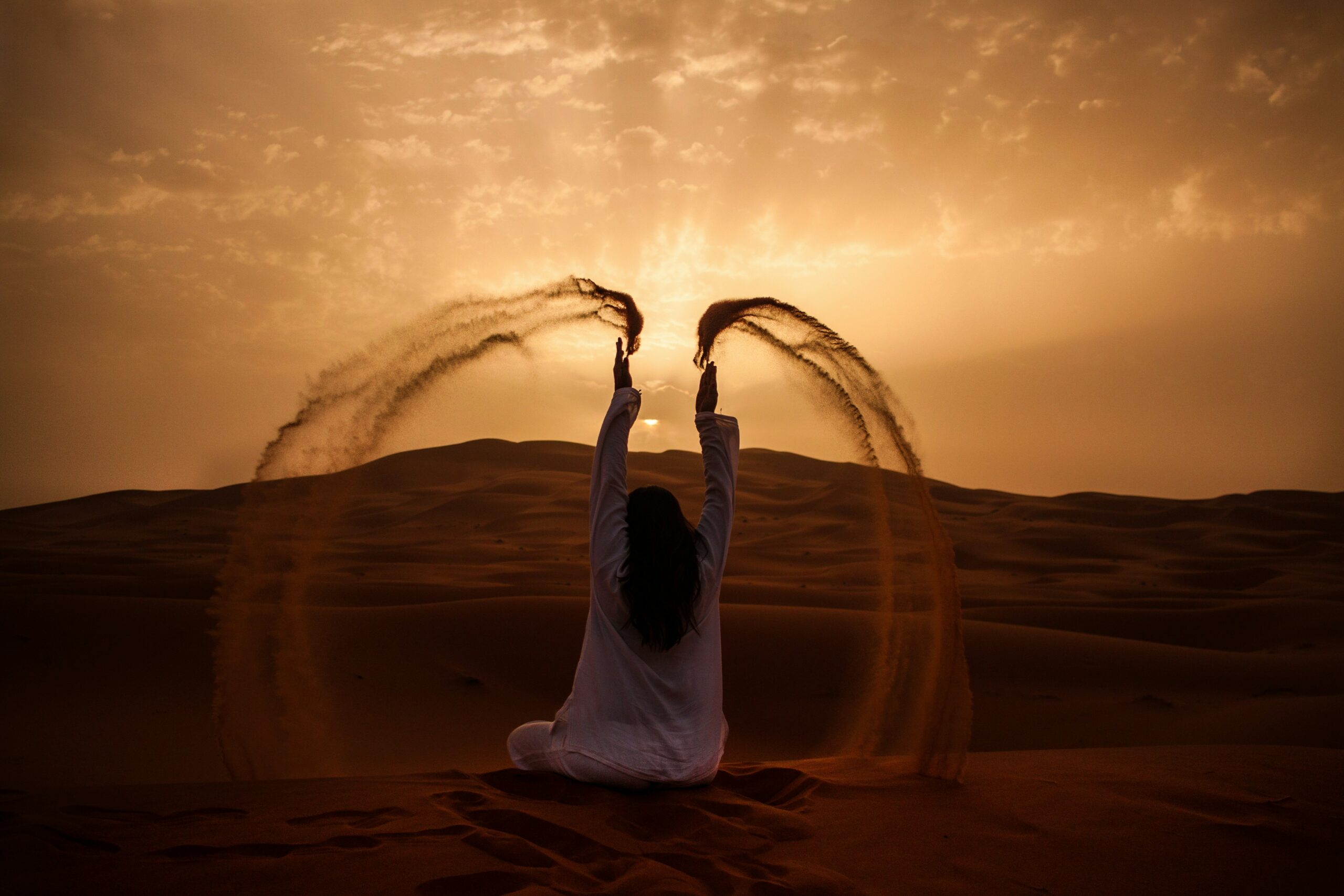
Enjoy camel trekking and overnight camping in the Sahara
Walk through cedar forests and spot wild Barbary monkeys
Cross the Middle and High Atlas Mountains with panoramic stops
Explore Fes’ medina, tanneries, and vibrant souks
Traverse the High Atlas Mountains with panoramic viewpoints
10-Day Tanger to Marrakech Desert Trip Itinerary
Day 1: Arrival in Tangier
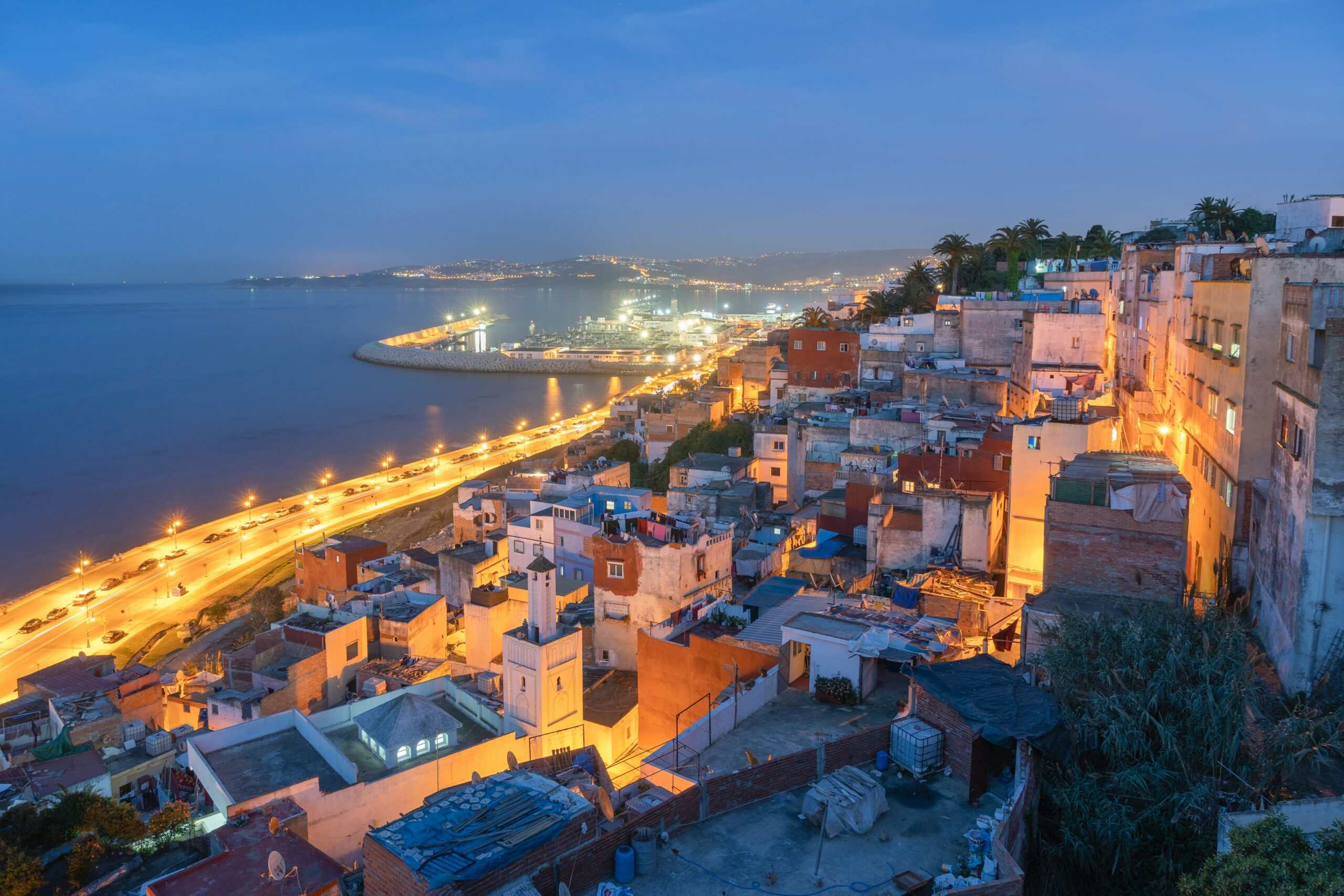
Tangier is a city that has always existed at a crossroads — between continents, between seas, between cultures — and arriving here sets an appropriately adventurous tone for the journey ahead. After transferring to your hotel, the afternoon is spent on a panoramic coastal drive that takes full advantage of the city’s extraordinary setting: clifftop viewpoints where the Atlantic and Mediterranean visibly meet, sea caves worn into the rock by centuries of waves, and historic sites that speak to a city that has been coveted and contested for millennia. A traditional Moroccan dinner brings the first evening to a warm and flavorful close.
Day 2: Tangier – Chefchaouen
The road from Tangier climbs into the Rif Mountains — a landscape of forested ridges, terraced hillsides, and small villages perched above deep valleys — before arriving in Chefchaouen, a town that genuinely earns its reputation as one of Morocco’s most beautiful places. The medina is a maze of blue and white, every alleyway more photogenic than the last, and the atmosphere is unhurried in a way that the bigger cities simply aren’t. Artisan shops, a bustling main square, and the quiet of the surrounding mountains all contribute to a character that is entirely Chefchaouen’s own. Dinner and overnight, and a chance to wander after dark when the blue lanes take on a different, quieter kind of magic.
Day 3: Fes Exploration
A final morning stroll through Chefchaouen before the road heads south — and the day ahead is one of the most historically rich of the entire journey. Volubilis arrives first, and it stops most visitors in their tracks. This was Rome at its most ambitious and most remote, and the ruins that remain — detailed mosaics still vivid after two thousand years, a triumphal arch framing the open Moroccan sky, the foundations of temples and noble houses spread across a hilltop — are as impressive as anything the ancient world left behind on this continent.
Meknes follows, and its imperial scale is immediately apparent. The Bab Mansour gate alone — one of the most ornate and imposing gateways in all of North Africa — is worth the stop, and the royal granaries and stables that Sultan Moulay Ismail built here hint at ambitions that bordered on the grandiose. The afternoon carries you into Fes, where a comfortable overnight prepares you for the full day’s immersion that follows.
Day 4: Full Day in Fes
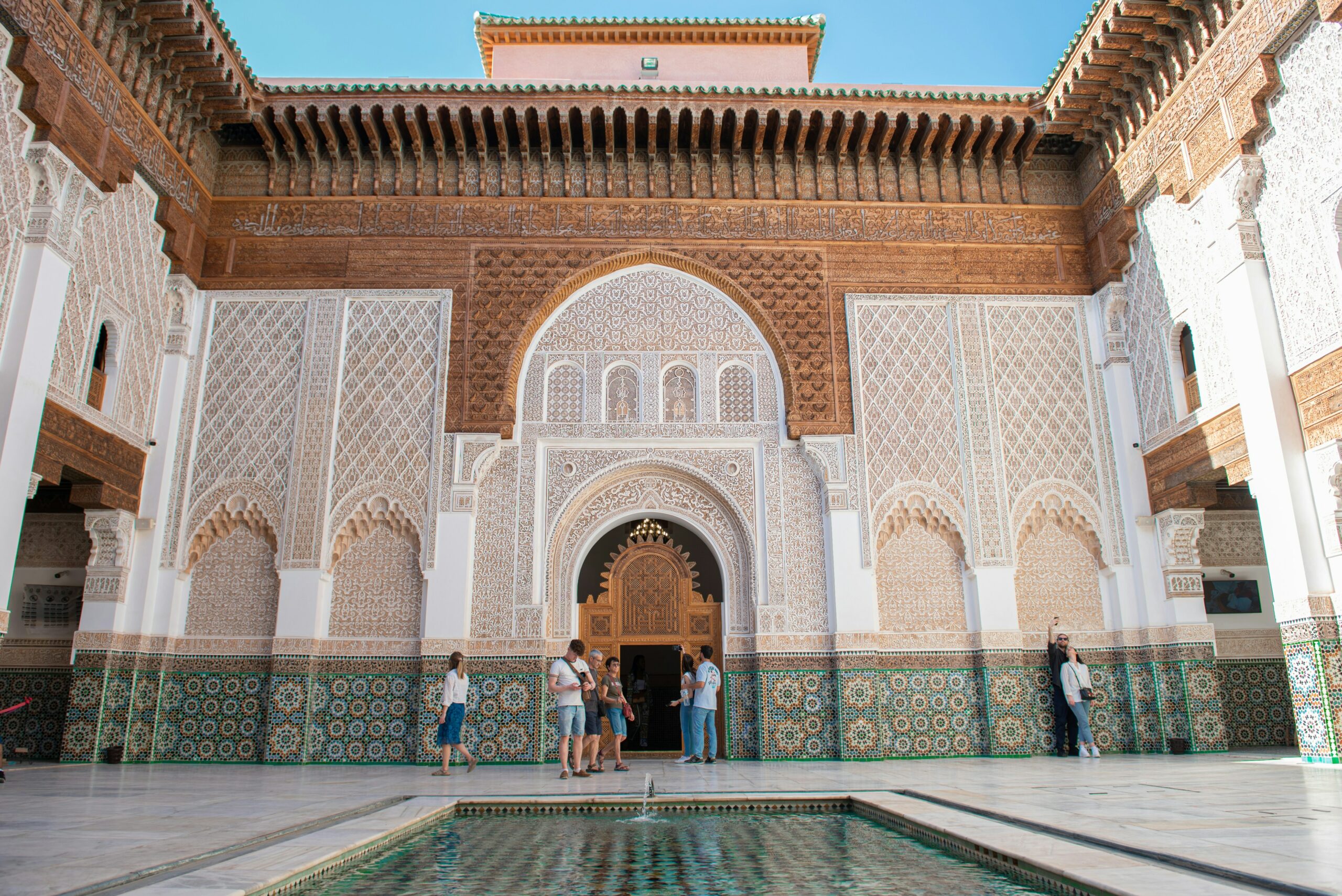
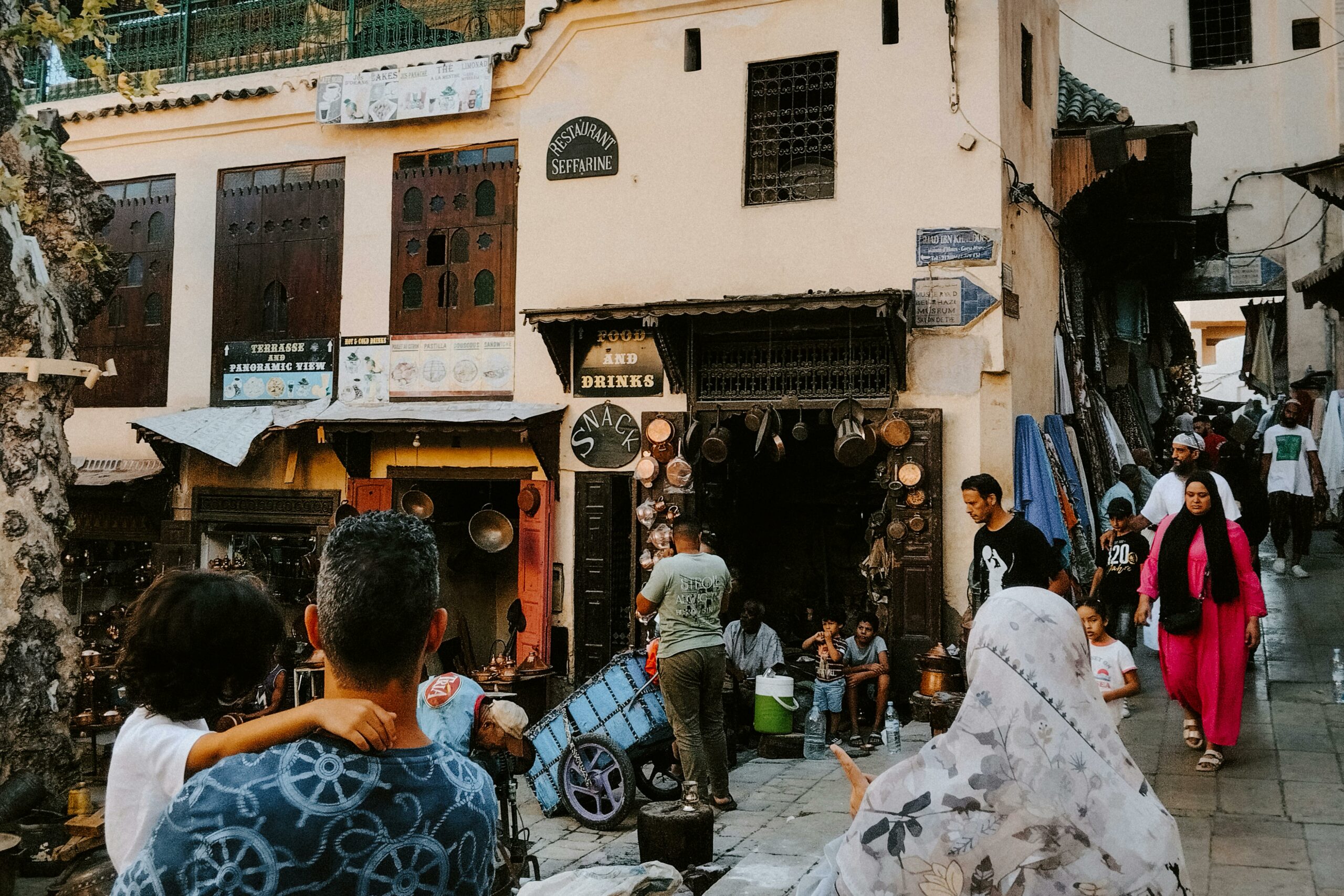
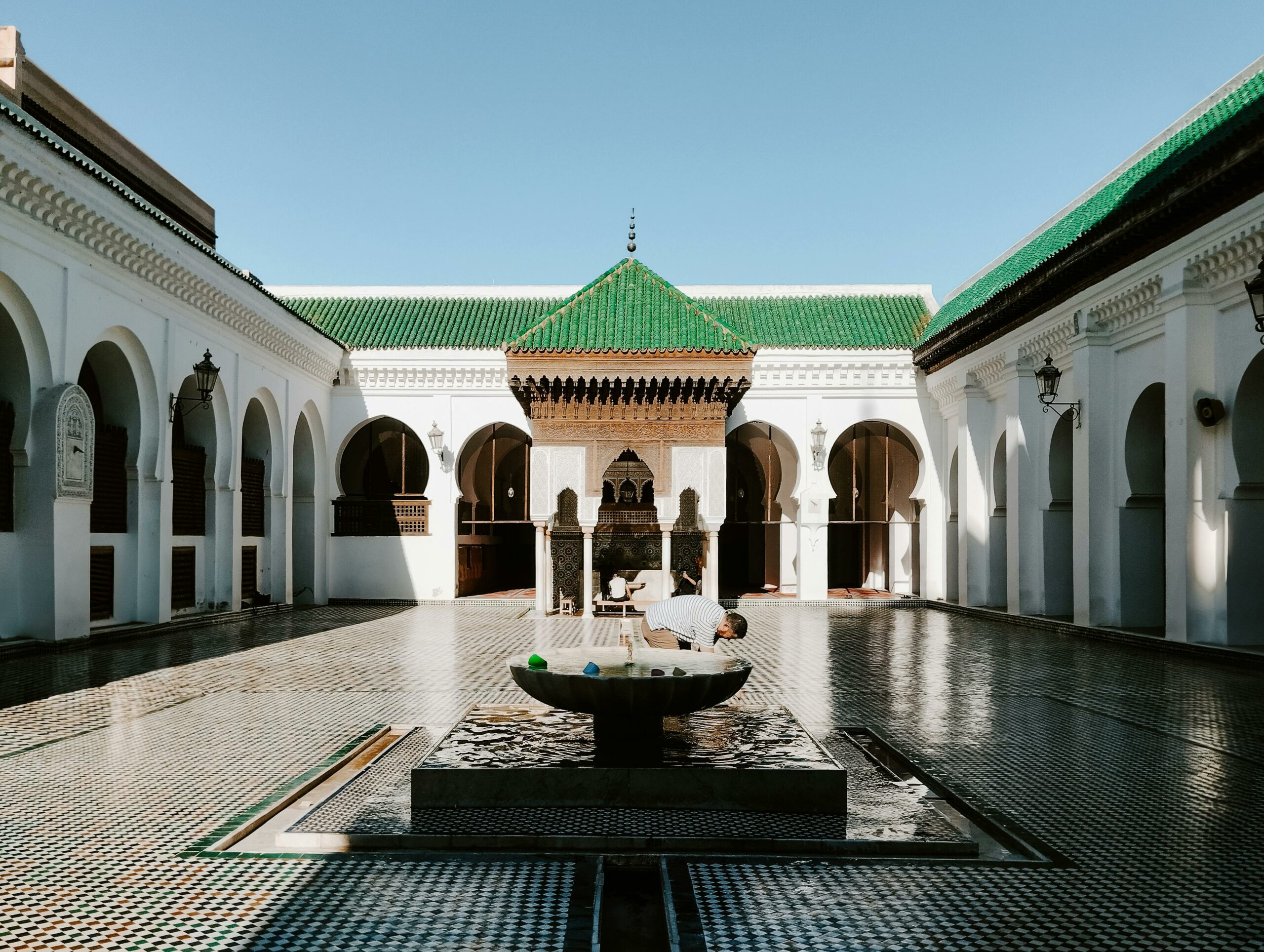
A full day in Fes, and every hour of it justified. The UNESCO-listed medina of Fes el-Bali is the largest car-free medieval city in the world, and its layered complexity rewards slow, attentive exploration more than almost any other place in Morocco. The day moves through thousands of interconnected alleyways, past the elaborately decorated facades of ancient madrasas — their carved plaster and painted cedar representing centuries of accumulated craft — through the famous tanneries where the smell hits you before the sight does and the view from above is one of those images that defines Morocco for a reason, and into the workshops where potters, weavers, metalworkers, and leather craftsmen practice trades that have been carried out in these same streets for generations.
The Jewish quarter, the royal palace gates, the ancient mosques and ornate fountains — all of it builds into an experience that is genuinely overwhelming in the best possible sense. Panoramic city views at the end of the day, dinner, and the particular satisfaction of a place that has given you far more than you could have absorbed in a single visit.
Day 5: Fes – Ifrane – Midelt – Merzouga
Leaving Fes, the road heads southeast into the Middle Atlas — and the landscape shifts almost immediately from the urban density of the medina to open mountain country. Ifrane arrives first, its clean streets and steep-roofed European-style architecture making it feel like a town that genuinely took a wrong turn somewhere in Switzerland and ended up in Morocco instead. It’s a charming and slightly surreal stop, and the cedar forests just beyond it — where Barbary macaques move freely through the trees with complete and endearing confidence — are a genuine delight.
The Middle Atlas gives way to the high plateau around Midelt, where a lunch stop offers a chance to rest before the road pushes southeast toward the desert. The Ziz Valley appears in the afternoon — palm groves lining the river in a long lush sweep through the arid terrain — and then the landscape opens into the flat pre-Saharan plains. Merzouga is reached at sunset, the timing perfect for a first glimpse of Erg Chebbi’s dunes glowing in the last of the day’s light.
Day 6: Merzouga – Erg Chebbi – Desert Camp
The early morning belongs to the desert — and the Sahara at dawn has a particular quality of silence and color that sets the tone for an extraordinary day. After breakfast, the wider Merzouga region opens up for exploration: nomadic families living in the desert landscape welcome visitors with tea and conversation, offering a window into a way of life shaped entirely by the rhythms and demands of the desert. It’s one of those cultural encounters that stays with you.
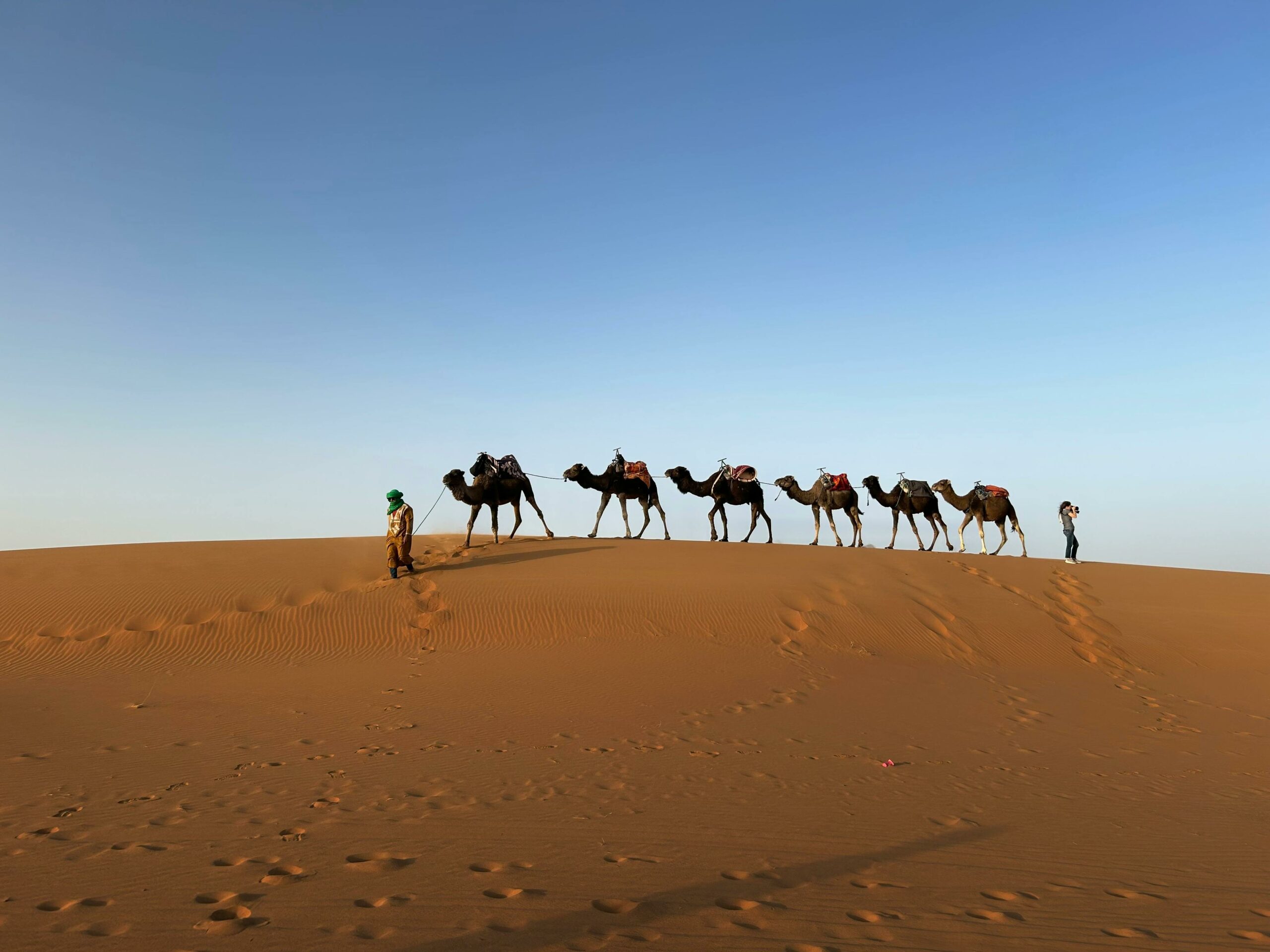
By late afternoon, the camels are ready. The trek out across the golden dunes of Erg Chebbi as the sun descends is the kind of experience that earns its place in travel memory permanently — the scale of the dunes, the silence, the extraordinary light pulling color from the sand with every passing minute. Camp receives you warmly as darkness falls: a traditional Moroccan dinner, the rhythmic pulse of Berber music around the fire, and a sky so dense with stars that sleep feels almost wasteful.
Day 7: Merzouga – Todra Gorges – Dades Valley
The Sahara sunrise is worth setting every alarm you own. The dunes shift through deep shadow and amber and brilliant gold as the first light finds them — quietly, unhurriedly, and in near-total silence. A camel carries you back to the desert’s edge, and after breakfast the journey heads west.
Todra Gorge arrives in the afternoon, and the impact is immediate. Canyon walls nearly 300 meters high rise on either side of a narrow corridor through which a clear river winds past clusters of palms and patches of vivid green — and the scale of the place is genuinely humbling in the best possible way. The Dades Valley follows, its extraordinary rock formations and layered canyon walls making it one of the most visually striking landscapes in the entire south. Berber villages dot the valley floor, and the evening light on those cliffs is something that photographers and non-photographers alike tend to stand in front of for a very long time.
Day 8: Dades Valley – Skoura – Aït Ben Haddou – Marrakech
The drive west on the final day of the road journey is consistently beautiful from start to finish. The Skoura Oasis opens the morning — a wide, peaceful expanse of dense palm groves and ancient earthen kasbahs that feels completely removed from the canyon country behind you and the mountains ahead. The Valley of Roses follows, fragrant and soft in color, its traditional villages and rose water distilleries representing a way of life that has been unfolding in this valley for generations.
Ait Ben Haddou is the day’s centerpiece, and it fully earns the attention. This ancient fortified ksar — its earthen towers rising from a rocky outcrop above a dry riverbed, its alleyways unchanged in centuries — is one of the most iconic and genuinely moving sites in all of Morocco. A UNESCO World Heritage Site and a former waypoint on the trans-Saharan caravan routes, it rewards a proper, unhurried exploration. From Ait Ben Haddou, the road climbs back into the High Atlas for one final crossing — sweeping panoramas at every turn, the mountains asserting themselves one last time — before the long descent delivers you into Marrakech as the evening begins.
Day 9: Full Day in Marrakech
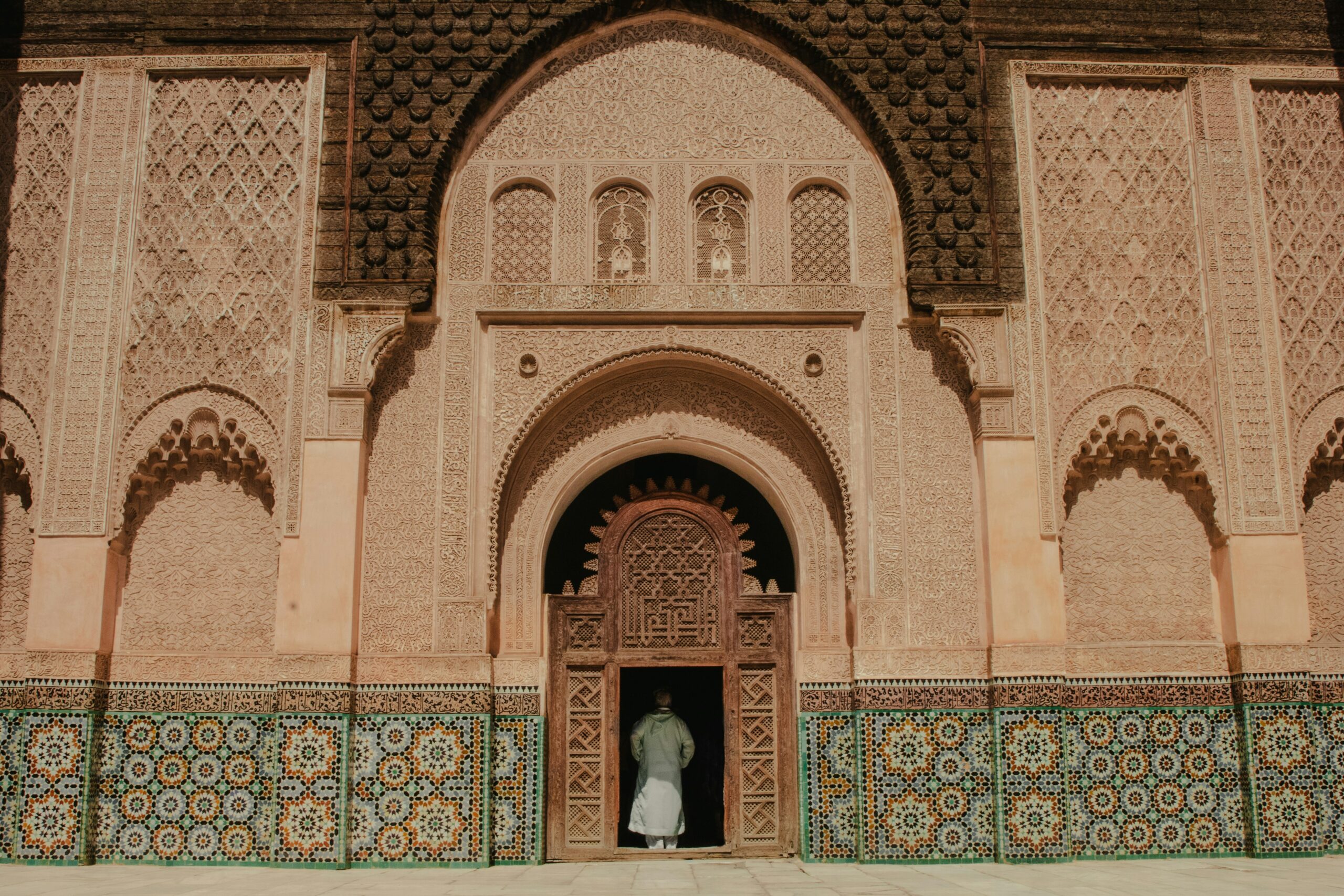
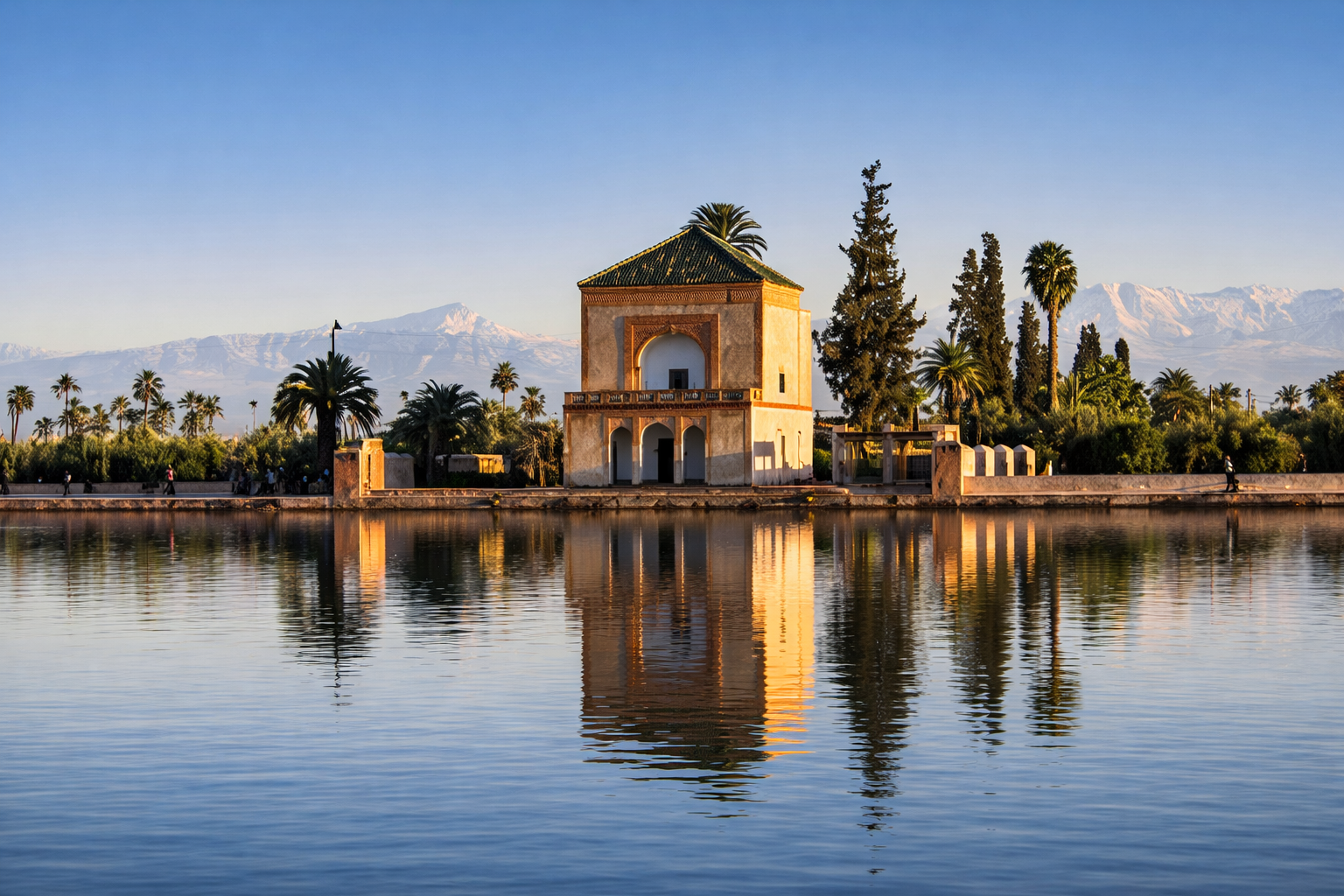
Marrakech gives you a full day, and it uses every minute of it well. The medina unfolds at whatever pace suits you — the souks a dense, colorful, wonderfully chaotic world of spices, textiles, leather goods, ceramics, and crafts, the artisan quarters where woodworkers and weavers and metalworkers practice their trades openly and with obvious skill. Historic palaces hide behind unassuming doorways, their elaborately decorated interiors a reminder of the city’s centuries as a seat of imperial power. Serene garden sanctuaries offer cool, geometric calm. Ancient tombs decorated with some of the finest tilework in the country. And the great minaret of the Koutoubia mosque watching over everything with unhurried authority.
The afternoon is yours — shopping, a long lunch, further wandering, or simply sitting in a riad courtyard letting the sounds of the city filter in. And then Djemaa el-Fna in the evening: the famous main square transformed into something between a carnival, a market, and a theatre, its energy building as the night deepens, food stalls sending smoke into the air, musicians and storytellers drawing crowds from every direction. It is one of the great urban experiences in the world, and it never disappoints.
Day 10: Departure from Marrakech
A final breakfast, a last look at the city through the window of a taxi, and then the airport and the journey home — carrying ten days of mountains, desert, ancient cities, and open road with you, and the particular kind of quiet satisfaction that only a journey this complete can leave behind.
Gallery
What’s Included & Excluded
- Private or small-group transportation in a comfortable, air-conditioned vehicle
- Professional, licensed driver and/or local guide (depending on the trip)
- Pick-up and drop-off at your hotel, riad, or agreed meeting point
- Accommodation (hotels, riads, desert camps) as specified in the itinerary
- Breakfasts & dinners (depending on the type of accommodation chosen)
- Activities and experiences listed in the itinerary (quad biking, camel trekking, excursions, etc.)
- All fuel, road tolls, and parking fees
- Local assistance and 24/7 customer support during your trip
- International or domestic flights
- Travel insurance and personal expenses
- Drinks and meals not mentioned in the itinerary
- Entrance fees to monuments and attractions (unless otherwise stated)
- Tips and gratuities for guides, drivers, and staff (optional but appreciated)
- Optional activities not listed in the trip program