
7-Day Morocco Tour from Casablanca to Marrakech
From Casablanca
6 Day
To Marrakech
About this trip
Seven days to travel Morocco from its modern Atlantic face to its ancient imperial heart — and to experience just about everything extraordinary that lies between.
This tour begins in Casablanca and ends in Marrakech, but the journey between those two cities is the entire point. You’ll move through Rabat’s royal monuments, Meknes’ imperial grandeur, the ancient Roman ruins of Volubilis, and the medieval labyrinth of Fes before heading south through cedar forests and mountain passes to the Saharan dunes of Merzouga. From the desert, the route winds through dramatic gorges, rose-scented valleys, and ancient kasbahs before one final crossing of the High Atlas delivers you into Marrakech — a city that needs a full day to begin to understand and rewards every minute given to it.
Culture, adventure, history, and natural beauty — this tour offers all four in generous, unhurried measure.
Trip Highlights:
Explore Morocco’s imperial cities of Fez and Meknes, with historic medinas and royal landmarks
Visit the ancient Roman ruins of Volubilis
Cross the scenic Middle and High Atlas Mountains, passing charming Berber villages and cedar forests
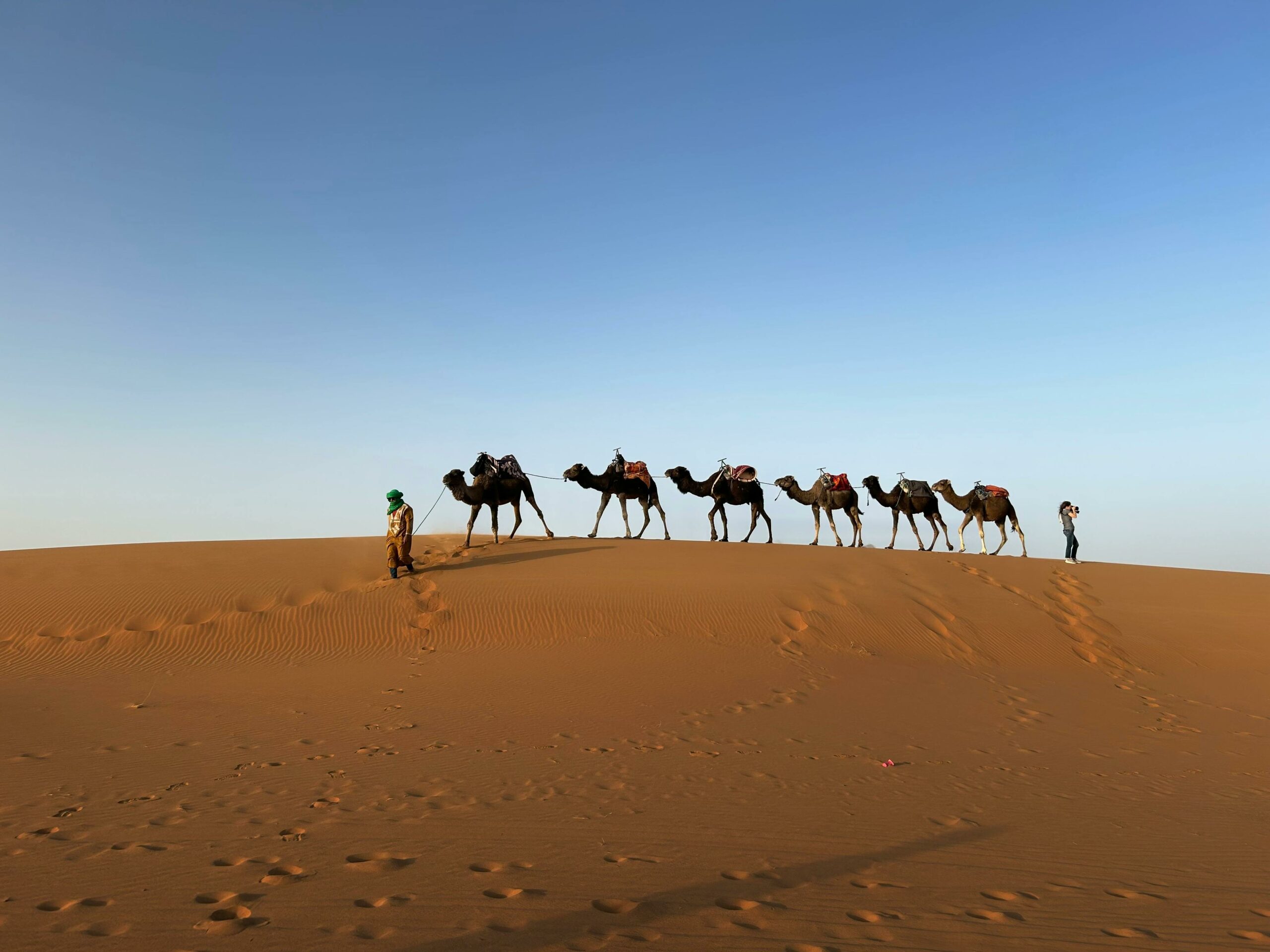
Enjoy camel trekking and spend a magical night in the Sahara Desert
Explore the Todgha Gorges and picturesque Dades Valley
Discover Todra Gorge, Dades Valley, and the fragrant Valley of Roses
Drive along the “Route of a Thousand Kasbahs” and visit traditional kasbahs
Experience Marrakech’s vibrant medina, bustling souks, and iconic monuments
7-Day Casablanca to Marrakech Desert Trip Itinerary
Day 1: Casablanca – Rabat
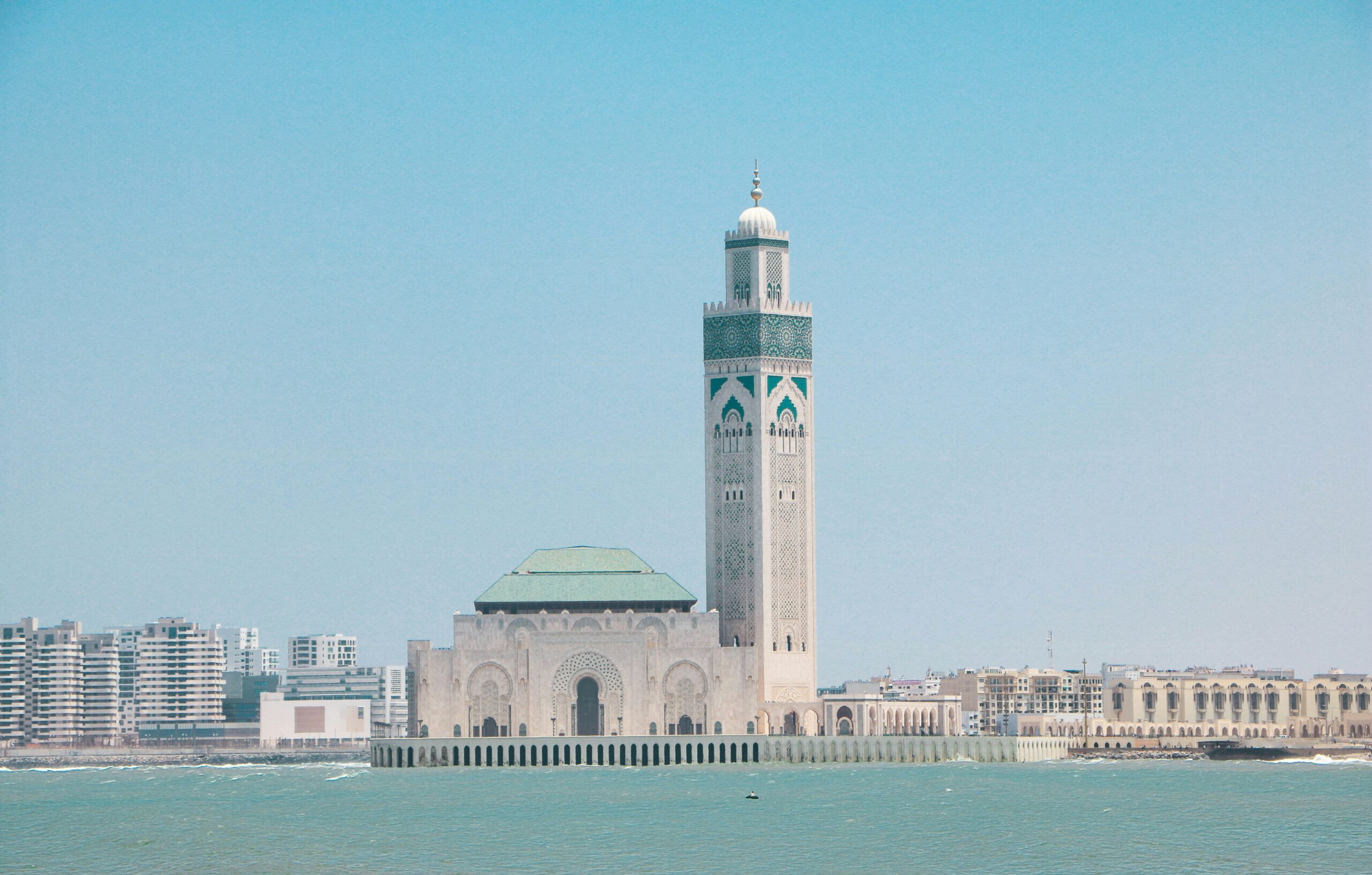
The tour opens in Casablanca with a visit to the Hassan II Mosque — one of the largest mosques in the world and among its most dramatically sited, its towering minaret rising above a vast terrace built directly over the Atlantic Ocean. The combination of scale, craftsmanship, and oceanfront position makes it genuinely breathtaking, and a fitting opening statement for a country that does architecture rather well. A walk through the city’s central squares and historic landmarks before the road heads north along the coast to Rabat.
Morocco’s capital is a city that consistently surprises visitors who arrive expecting something purely administrative. The Hassan Tower — a twelfth-century minaret that was never completed, surrounded now by a field of ancient columns — is one of the most atmospheric monuments in the country. The Kasbah of the Oudayas, perched above the point where the river meets the sea, has some of the most beautiful blue-and-white alleyways in Morocco and views that justify a long, slow wander. A comfortable overnight in the capital before the imperial cities begin in earnest.
Day 2: Rabat – Meknes – Volubilis – Fez
Meknes is the imperial city that Morocco’s visitors most often overlook, and it rewards the attention generously. The Bab el-Mansour gate — intricately decorated and built to a scale that announces power without ambiguity — is one of the finest pieces of architecture in North Africa. The Sahrij Souani reservoir and royal granaries built by Sultan Moulay Ismail hint at a project of almost overwhelming ambition, and the mausoleum of the sultan himself is a place of quiet, ornate beauty. Meknes has the relaxed confidence of a city that knows its own worth without needing to compete for attention.
From Meknes, the road leads to Volubilis — and the Roman ruins here are a genuinely extraordinary thing to stand inside. Mosaics of remarkable detail still intact after two millennia, a triumphal arch framing the open Moroccan sky, the foundations of temples and noble houses spread across a hilltop that Rome once considered worth defending at the edge of its known world. A stop at the hilltop town of Moulay Idriss Zerhoun adds a layer of Islamic spiritual history before the scenic mountain road carries you into Fes as evening falls.
Day 3: Fez Guided Tour
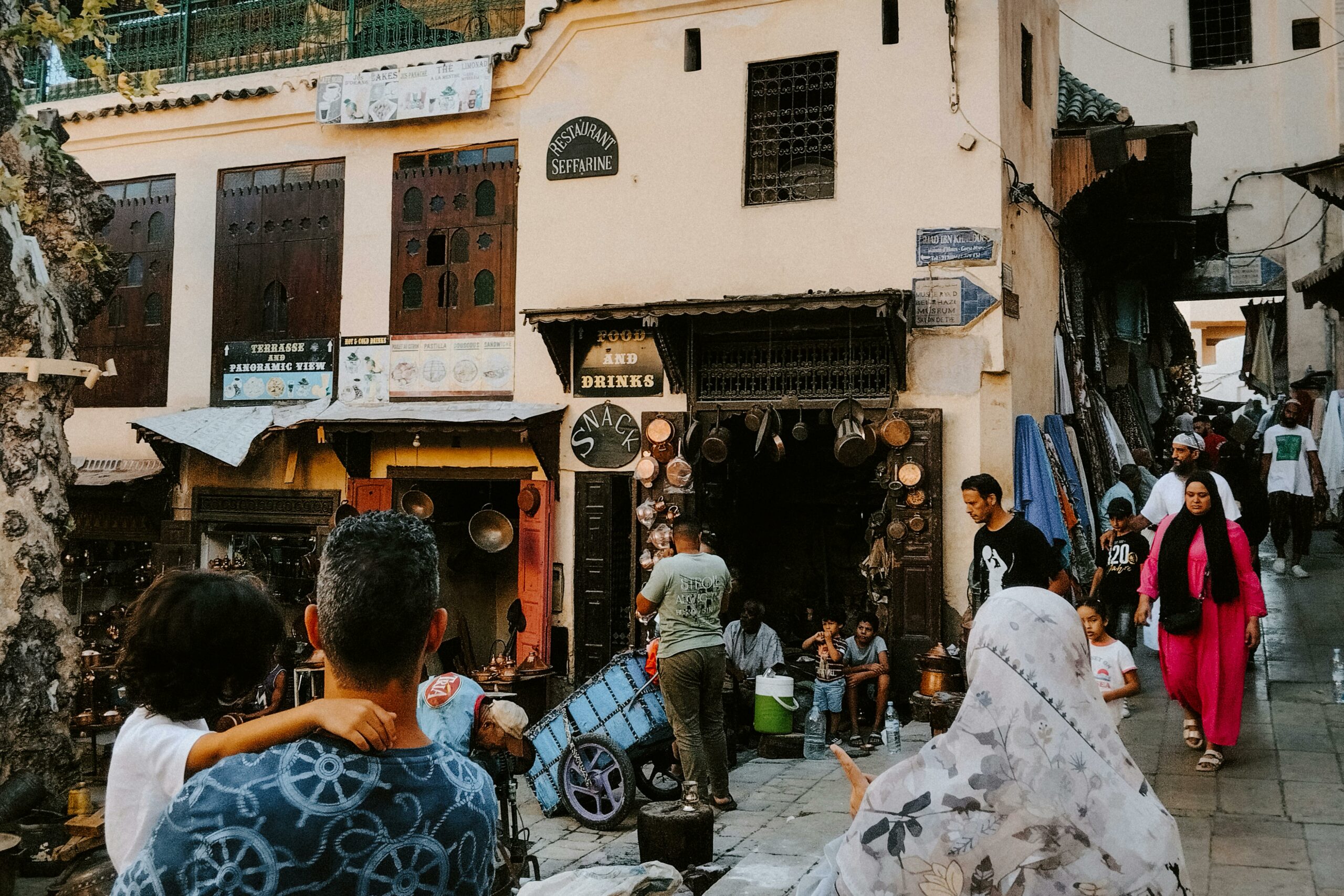
A full day in Fes with a knowledgeable local guide, and it earns every hour. The UNESCO-listed medina of Fes el-Bali is the largest car-free medieval city on earth — a living, breathing labyrinth of over nine thousand alleyways in which twelve centuries of craft tradition, religious life, commerce, and architecture coexist with an intensity that is genuinely unlike anywhere else.
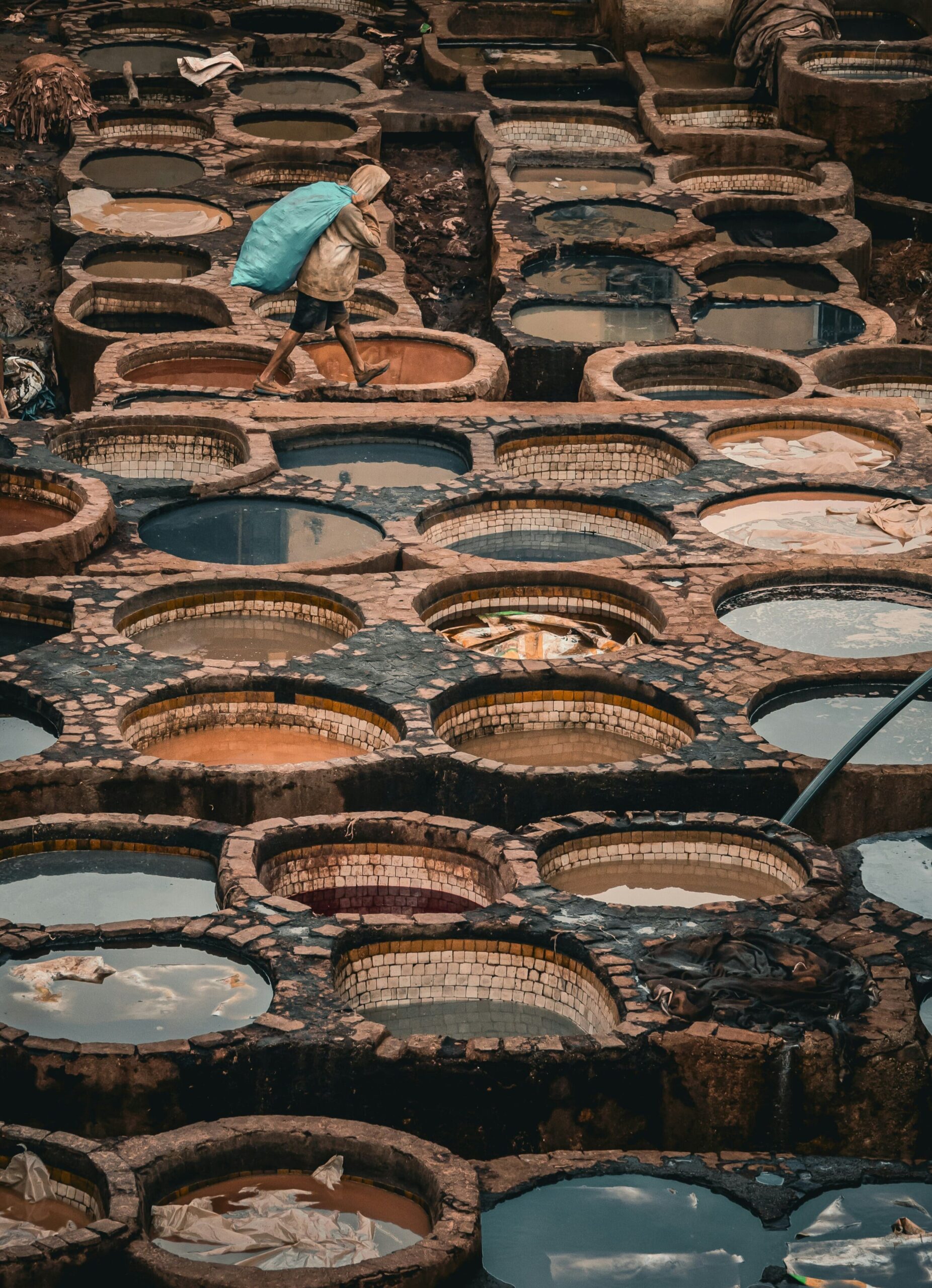
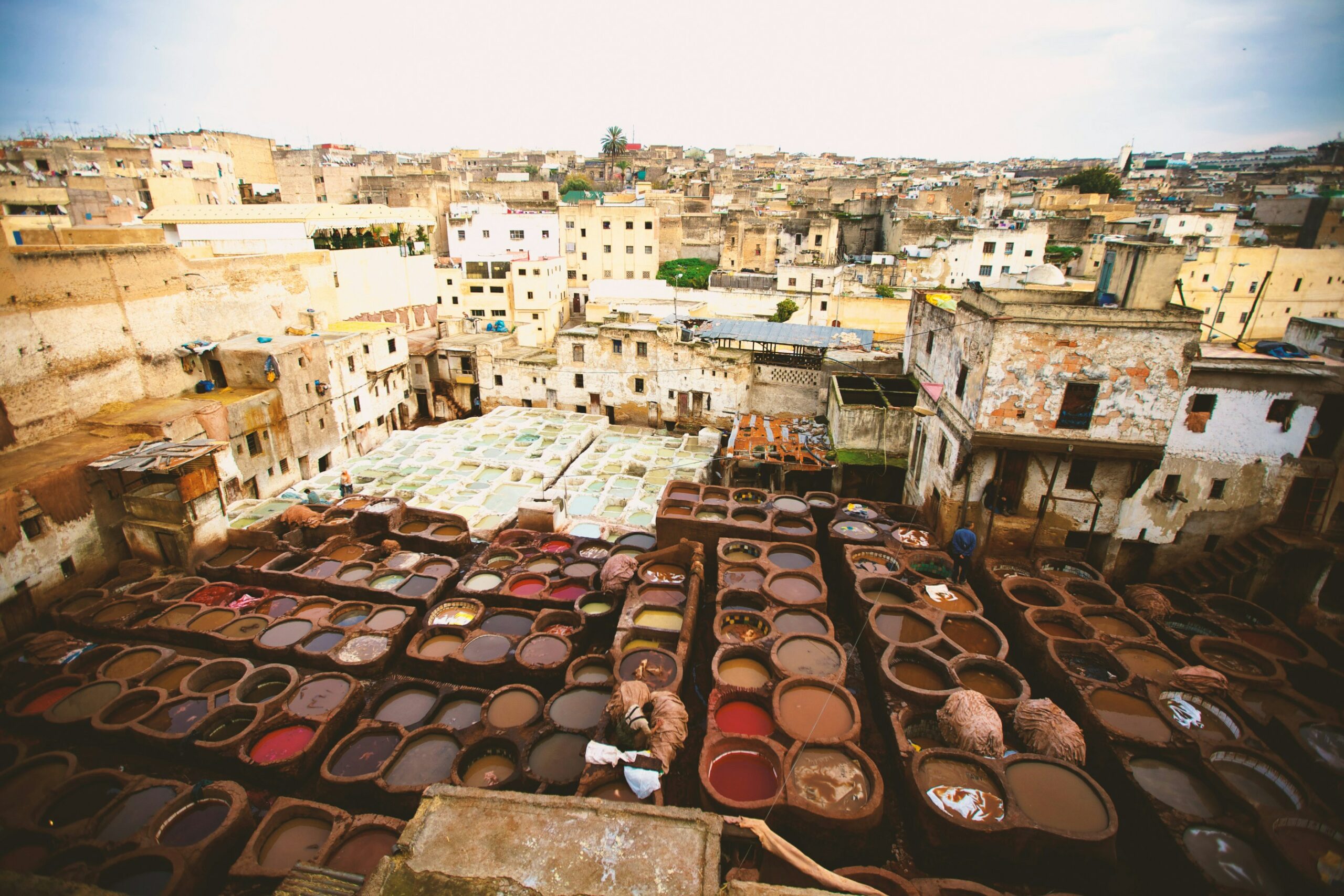
The Blue Gate of Bab Boujloud is the classic entry point, and the day moves inward from there — through the Bou Inania and Attarine madrasas, whose carved plaster and painted cedar ceilings represent the absolute peak of Moroccan decorative craft, past the Al-Quaraouiyine Mosque and University — the oldest continuously operating university in the world — and through the alleyways that lead to the famous tanneries. The view from the surrounding balconies, looking down over the stone dyeing vats where leather has been worked for generations, is one of the iconic images of Moroccan travel and no less powerful for being familiar. The Royal Palace exterior, the Jewish quarter, and the artisan workshops where weavers, potters, and coppersmiths practice their trades openly and with obvious skill — all of it builds into an experience that is overwhelming in the best possible sense, and that rewards the full day entirely.
Day 4: Fez – Ifrane – Middle Atlas Mountains – Merzouga Desert
Leaving Fes, the road heads southeast and the landscape shifts almost immediately from the dense urban world of the medina to the open, forested country of the Middle Atlas. Ifrane arrives first — its clean European-style streets and manicured appearance earning the “Switzerland of Morocco” comparison with complete justification, and providing a pleasantly incongruous pause before the cedar forests beyond Azrou take over. Barbary macaques move freely through the trees here with the unhurried ease of animals entirely at home in their environment, peering down at visitors with obvious curiosity and no particular hurry to move on.
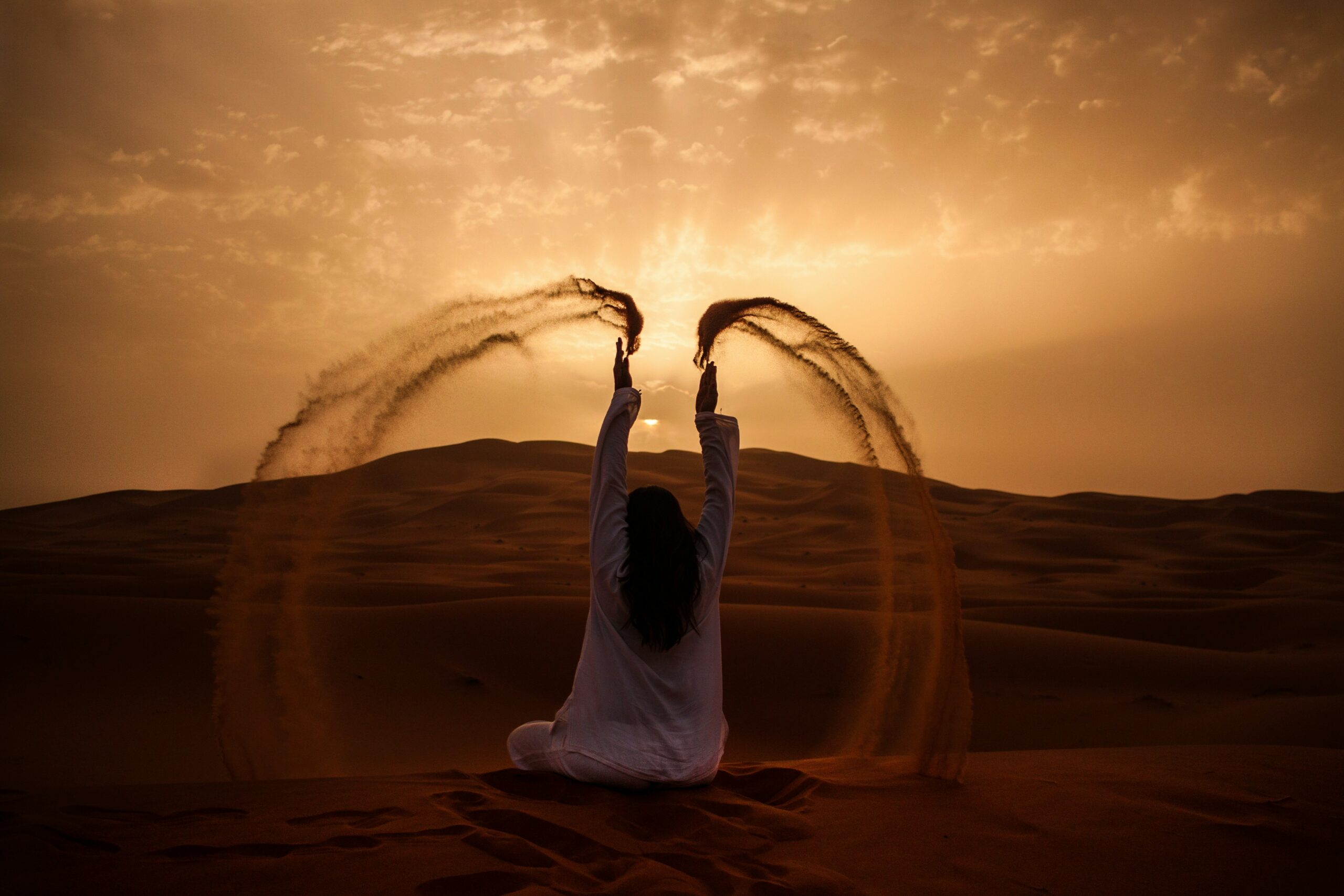
The Ziz Valley provides the transition from mountain to desert — a long, beautiful corridor of palm groves threading through the surrounding aridity, one of Morocco’s finest natural drives — before the flat pre-Saharan plains open out and the dunes of Erg Chebbi begin to rise on the horizon. The camel trek out across the sands at sunset is precisely as extraordinary as it sounds: the silence, the scale, the light transforming every surface as the day ends in a slow, magnificent show of color. The luxury camp receives you warmly as darkness falls — a generous traditional dinner, the rhythmic pulse of Berber music carrying through the cool night air, and a sky so crowded with stars that sleep feels almost like a waste.
Day 5: Merzouga – Todra Gorge – Dades Valley
The Sahara sunrise rewards every alarm willingly set. The dunes shift through shadow and amber and gold as the first light moves across them in near-total silence — a quietly spectacular way to begin a day. After breakfast, camels carry you back to the desert’s edge, and the road heads west through Erfoud and Rissani — the latter particularly worth a pause for its traditional market and its historical significance as the ancestral home of Morocco’s ruling dynasty.
Todra Gorge arrives in the afternoon with immediate, undeniable impact. Canyon walls approaching 300 meters rise sheer on either side of a narrow corridor through which a clear river winds past clusters of palms and vivid patches of green. The atmosphere at the base of those walls — cool, cathedral-quiet, and utterly absorbing — is one of the most distinctive experiences the south has to offer. The Dades Valley follows, its extraordinary layered rock formations and sculptural cliffs creating a landscape of dramatic, otherworldly beauty. Berber villages dot the valley floor, and the evening light on those cliffs is the kind of thing photographers plan entire trips around.
Day 6: Dades Valley – Valley of Roses – Skoura – Ait Ben Haddou – Ouarzazate – Marrakech
The final road day is one of the richest of the entire journey. The Road of a Thousand Kasbahs earns its name from the very first kilometer, its historic fortified villages appearing one after another against a backdrop of southern Moroccan scenery that shifts constantly and always impresses. The Valley of Roses in Kelaa M’gouna arrives fragrant and softly colored — rose water and perfume have been produced here for generations, and the valley has a gentleness and beauty that stands in wonderful contrast to the canyon drama of the day before. Kasbah Ameridil in the Skoura Oasis follows — one of the most beautifully preserved historic kasbahs in the region, its restored earthen architecture speaking elegantly of a way of life shaped entirely by this landscape.
Ouarzazate — Morocco’s self-styled Hollywood, where the quality of light and the drama of the surrounding terrain have attracted international film productions for decades — offers a fascinating stop before the day’s crowning moment: Ait Ben Haddou. This UNESCO-listed fortified ksar, its ancient earthen towers rising from a rocky outcrop above a dry riverbed, is one of the most visually powerful and historically resonant places in all of Morocco. A proper exploration of its alleyways and a climb to the summit for the view, and then the High Atlas crossing via Tizi n’Tichka — panoramic views at every switchback, the mountains asserting themselves gloriously before the final descent toward Marrakech. The city receives you in the afternoon, and the medina and its rooftop terraces offer a warm and atmospheric welcome.
Day 7: Marrakech Guided Tour – Transfer to Casablanca
The final morning belongs to Marrakech, and a local guide ensures none of the good parts are missed. The Koutoubia Mosque — its twelfth-century minaret the architectural reference point for every minaret built in the western Islamic world that followed it — anchors the tour before the day moves into the Saadian Tombs, where the elaborate tilework and carved cedar of the burial chambers represent Moroccan decorative art at its most refined. The Majorelle Gardens offer a moment of extraordinary blue-tiled calm and botanical beauty before the medina takes over — its souks dense and colorful and endlessly navigable, its artisan quarters alive with the trades that have defined Marrakech for centuries.
Djemaa el-Fna in its midday form is already compelling, and lunch somewhere overlooking the square gives a proper sense of the city’s energy before the afternoon wraps up with free time to shop, wander, or simply sit with a mint tea and let Marrakech do what it does. The transfer to Casablanca follows — seven days of Morocco’s finest behind you, and the particular quiet satisfaction of a journey that delivered everything it promised.
Gallery
What’s Included & Excluded
- Private or small-group transportation in a comfortable, air-conditioned vehicle
- Professional, licensed driver and/or local guide (depending on the trip)
- Pick-up and drop-off at your hotel, riad, or agreed meeting point
- Accommodation (hotels, riads, desert camps) as specified in the itinerary
- Breakfasts & dinners (depending on the type of accommodation chosen)
- Activities and experiences listed in the itinerary (quad biking, camel trekking, excursions, etc.)
- All fuel, road tolls, and parking fees
- Local assistance and 24/7 customer support during your trip
- International or domestic flights
- Travel insurance and personal expenses
- Drinks and meals not mentioned in the itinerary
- Entrance fees to monuments and attractions (unless otherwise stated)
- Tips and gratuities for guides, drivers, and staff (optional but appreciated)
- Optional activities not listed in the trip program