
10-Day Morocco Grand Trip
From Casablanca
10 Day
To All
About this trip
Ten days to experience Morocco at its most complete — from the Atlantic coast to the Saharan dunes, from the blue mountain lanes of Chefchaouen to the ancient spiritual heart of Fes, through dramatic canyon country and over the High Atlas into Marrakech.
This is the tour for travelers who don’t want to choose between Morocco’s highlights — because this itinerary gives you all of them, woven together into a journey that moves with enough purpose to cover serious ground and enough breathing room to let each place actually register. Imperial cities, ancient ruins, medieval medinas, cedar forests, golden dunes, towering gorges, legendary kasbahs, and finally one of the world’s great cities to bring it all to a close. Ten days in Morocco, done properly — and there’s really no other way to do it justice.
Trip Highlights:
Explore Casablanca’s iconic coastal landmarks and modern architecture
Discover Rabat’s royal monuments, historic kasbahs, and scenic viewpoints
Discover Rabat’s royal monuments, historic kasbahs, and scenic viewpoints
Wander the cobalt-blue streets of Chefchaouen in the Rif Mountains
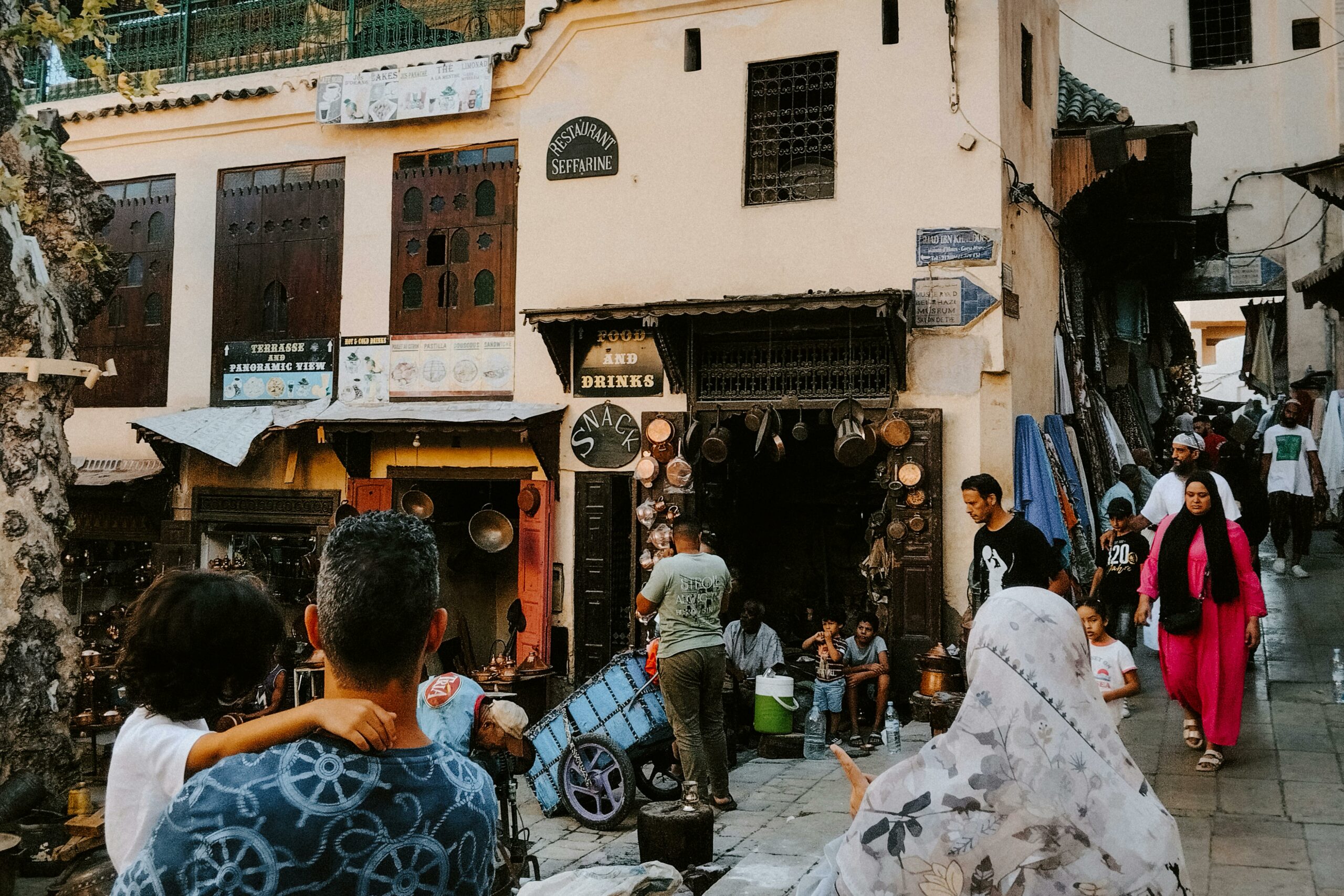
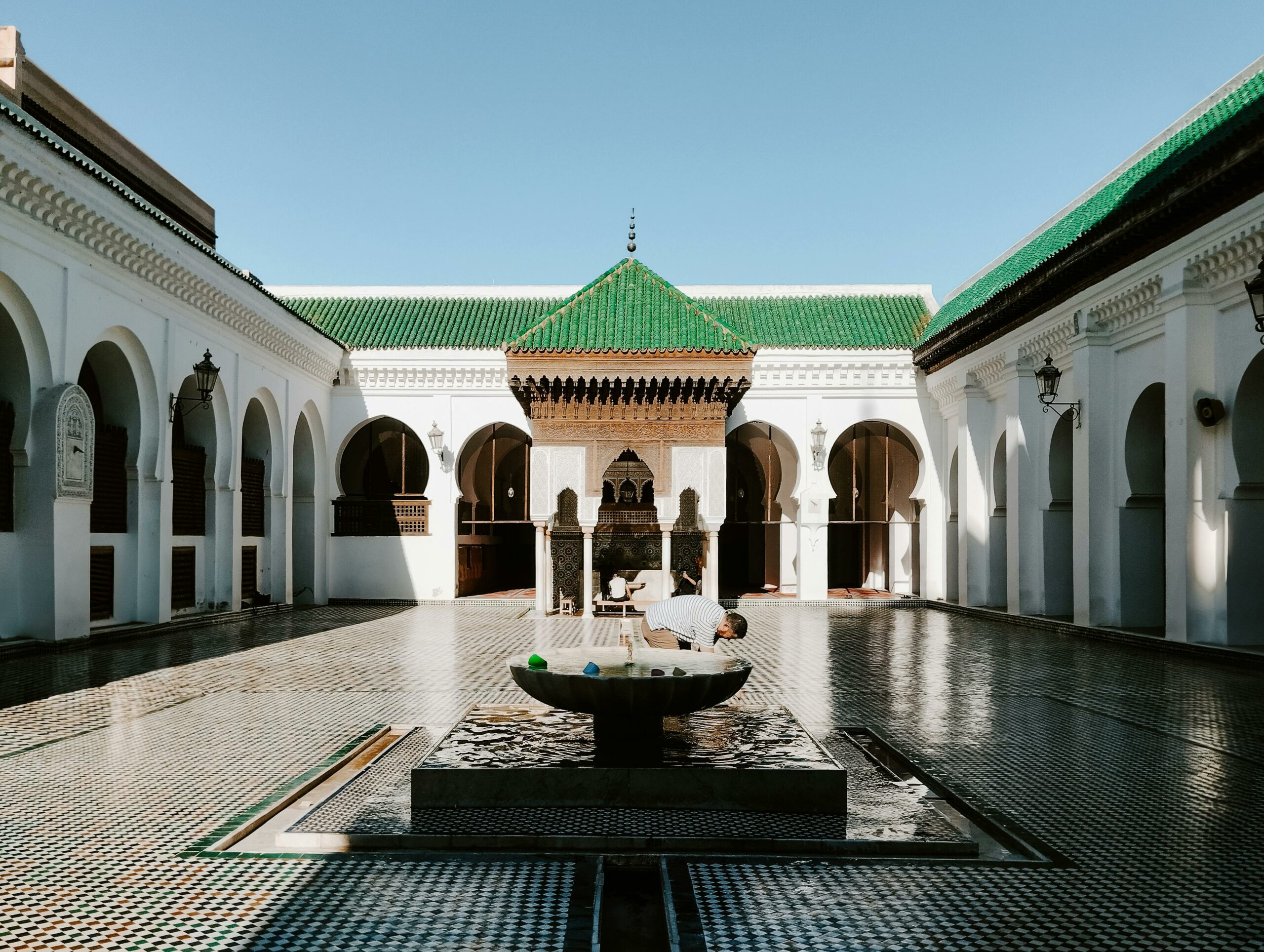
Immerse yourself in Fes’ UNESCO-listed medina, traditional crafts, and ancient university
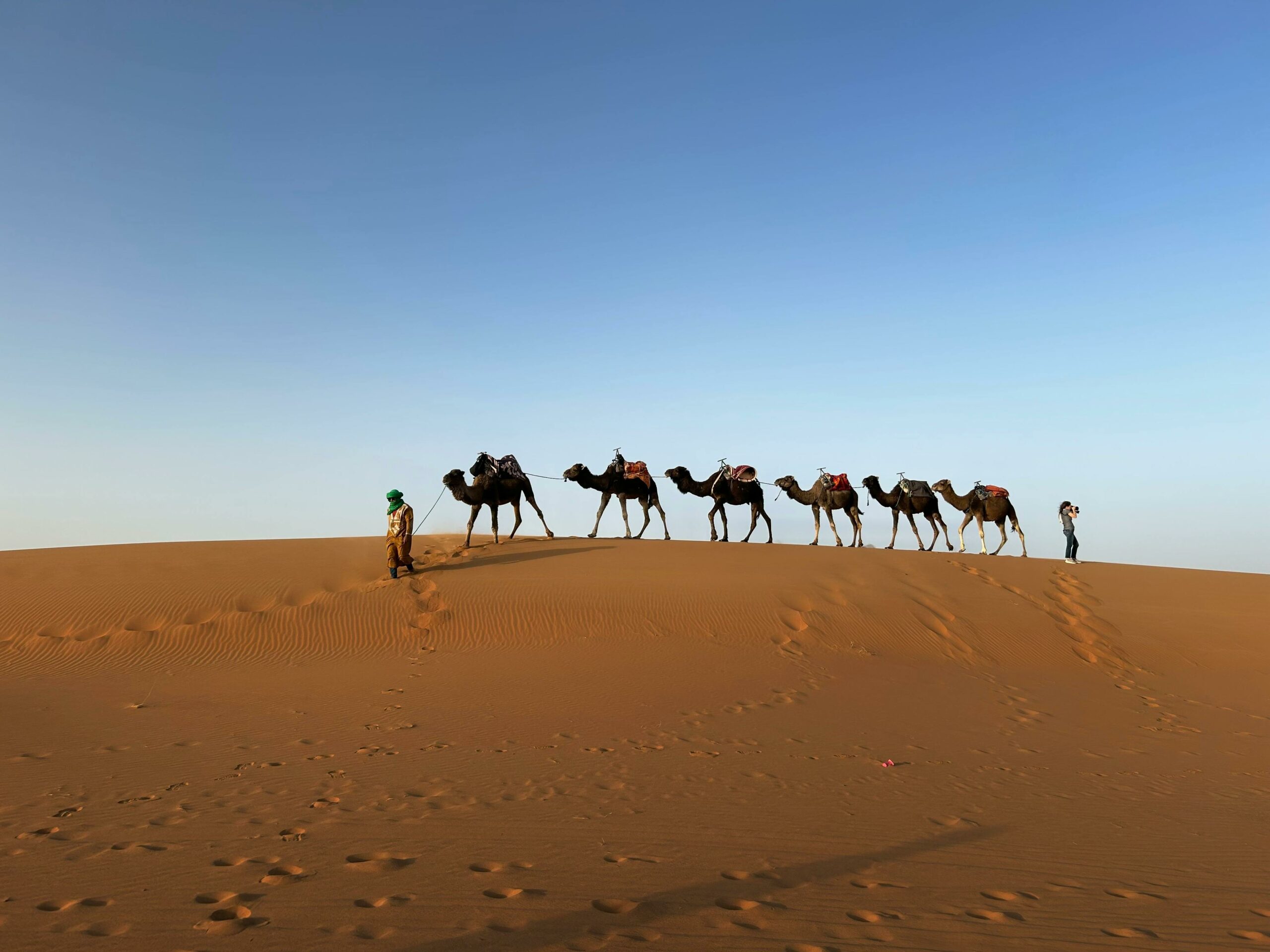
Ride camels and spend a magical night under the stars in the Sahara Desert near Merzouga
Hike and photograph the dramatic Todra Gorge and Dades Valley rock formation
Visit Ouarzazate’s film studios and historic kasbahs
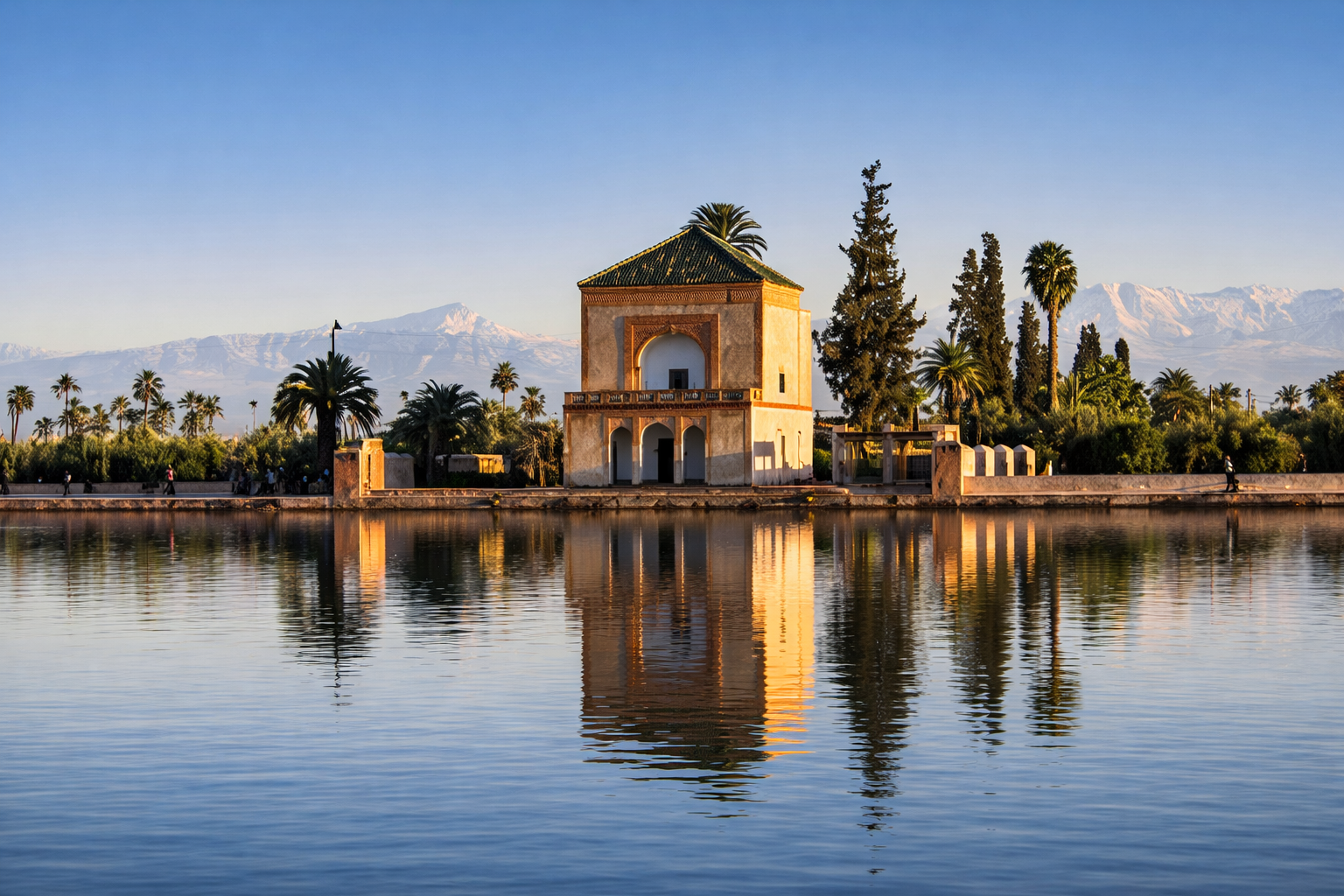
Experience Marrakech’s palaces, gardens, vibrant medina, and bustling markets
10-Day Morocco Grand Trip Itinerary
Day 1: Arrival in Casablanca
Morocco announces itself from the moment you land. After transferring to your hotel and taking a moment to settle in, the afternoon opens up for a first exploration of Casablanca — a city that wears its contrasts openly, where French colonial architecture and gleaming modern towers share a skyline with one of the most spectacular mosques in the Islamic world. The Hassan II Mosque, positioned directly above the Atlantic, is the obvious first stop — its scale and craftsmanship genuinely breathtaking in person. The old medina follows, with its colorful souks and artisan workshops offering an immediate, sensory introduction to the Moroccan street life that will accompany you throughout the journey.
Day 2: Casablanca – Rabat
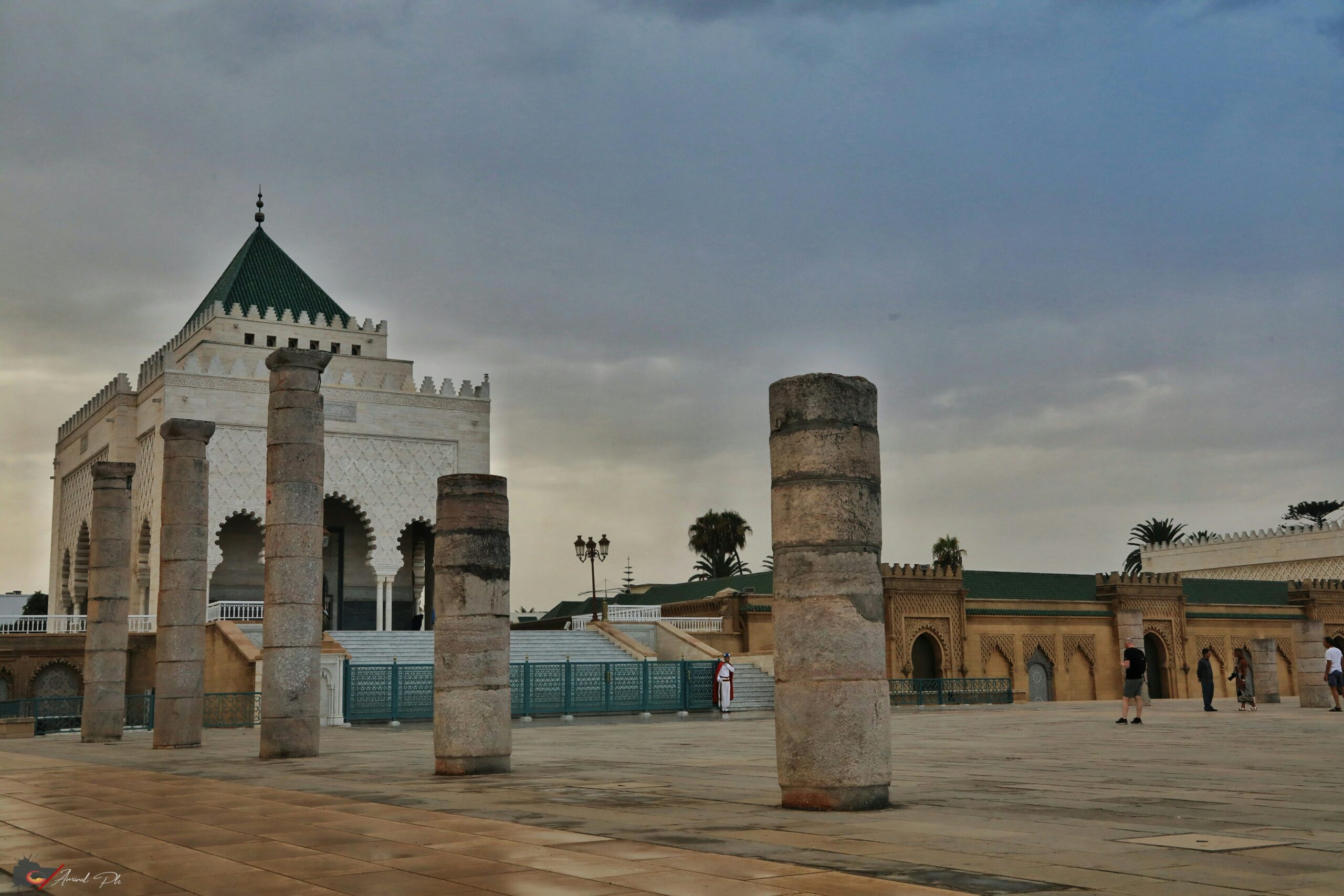
The road north along the Atlantic coast leads to Rabat — Morocco’s capital and a city that consistently rewards visitors who arrive without preconceptions. The Mausoleum of Mohammed V is one of the finest examples of traditional Moroccan craftsmanship anywhere in the country — its gleaming white marble exterior, intricate carved plaster interior, and dignified scale making it a genuinely moving place to spend time. The Hassan Tower alongside it, a twelfth-century minaret that was never completed, now stands among a field of ancient columns in a way that feels more poignant and atmospheric than any finished monument. The Kasbah of the Oudayas, perched above the point where the Bou Regreg river meets the sea, has beautiful blue-and-white alleyways and panoramic views that make it one of the most pleasant places to wander in the entire city. The Royal Palace and the old medina fill out a rich and varied day in a capital that deserves considerably more attention than it typically receives.
Day 3: Rabat – Chefchaouen
The road from Rabat heads northeast and then climbs into the Rif Mountains — forested ridges, terraced hillsides, and the occasional glimpse of distant coastline — before arriving in Chefchaouen, a town that earns every superlative directed at it and then some. The medina’s alleyways are washed in every shade of blue imaginable, the mountain air is cool and clean, and the pace of life here carries a genuine, unforced gentleness that is immediately apparent. Narrow streets lined with artisan shops and small cafes, a bustling central square where the evenings gather naturally, and the Rif Mountains rising on every side — Chefchaouen is the kind of place that slows you down instinctively, and it’s worth letting it. A perfect spot for photography, for wandering without purpose, and for a first proper immersion in Moroccan medina life before the larger, more complex cities that follow.
Day 4: Chefchaouen – Fes
Leaving Chefchaouen, the road heads south and east toward one of the most historically significant cities in the Islamic world. The journey itself passes through varied and rewarding countryside before Fes appears — ancient, layered, and carrying the weight of twelve centuries of accumulated history with complete ease. The afternoon allows for an initial exploration of the UNESCO-listed medina and its surrounding craft quarters: the Bou Inania Madrasa, whose elaborately carved plaster and painted cedar ceiling represent Moroccan decorative art at its most accomplished; the artisan workshops where potters, weavers, and leatherworkers practice techniques their ancestors developed in these same streets centuries ago; and the souks, whose density and energy provide a first sense of the city’s extraordinary living vitality. An overnight in Fes, with the full day’s exploration that follows already something to look forward to.
Day 5: Full Day in Fes
A second day in Fes, and it earns every hour. The UNESCO-listed medina of Fes el-Bali is the largest car-free medieval city on earth, and its sheer depth of history, architecture, and cultural life is genuinely inexhaustible. Today’s exploration goes deeper — Al-Quaraouiyine University, founded in 859 AD and recognized as the oldest continuously operating university in the world, its mosque and courtyard carrying a weight of scholarship and spiritual significance that is palpable even from the outside. The Dar Batha Museum, housed in a nineteenth-century Andalusian palace, offers a beautifully curated survey of traditional Moroccan crafts and architecture. The historic city gates, each with its own character and history. The famous tanneries, where the view from the surrounding balconies — stone dyeing vats of vivid color, workers moving through them with practiced efficiency — is one of the most iconic images in all of travel photography, and as powerful in person as it appears in any photograph.
The guide weaves the city’s stories through the day — the dynasties that shaped it, the scholars it produced, the trades it perfected — and by evening, standing at a historic vantage point with the medina spread out below, the accumulated richness of two days in Fes settles into something approaching a genuine understanding of why this city matters so much.
Day 6: Fes – Merzouga Desert
Departing Fes, the road heads southeast into the Middle Atlas and the landscape shifts dramatically — the dense urban world of the medina replaced almost immediately by open mountain country and cedar forest. Barbary macaques move freely through the trees above the road near Azrou, peering down at passing vehicles with the relaxed curiosity of animals entirely at home in their environment. The Ziz Valley provides the transition from mountain to desert — a long, beautiful corridor of palm groves threading through the surrounding aridity — and then the flat pre-Saharan plains open out and the dunes of Erg Chebbi begin to rise on the horizon.
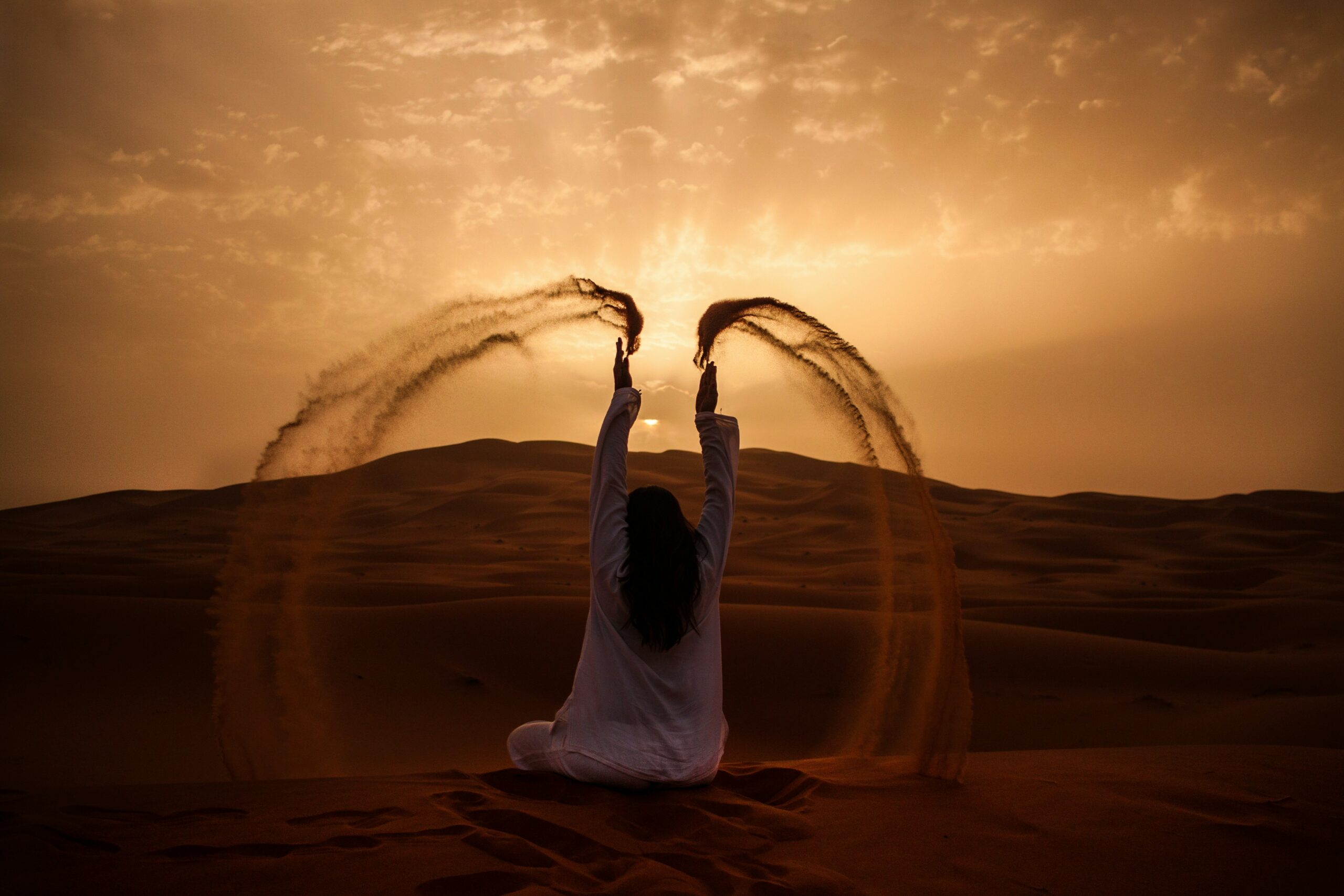
The camel trek into the dunes at sunset is one of those experiences that exists in a category of its own — the silence, the scale, the extraordinary light transforming every surface as the day ends in a slow show of gold and amber and deep rose. The luxury camp receives you as darkness settles: a generous traditional dinner, the rhythmic warmth of Berber music carrying through the cool night air, and a sky so crowded with stars that sleep feels, briefly, like a waste of a perfectly good desert night.
Day 7: Merzouga – Todra Gorge
The Sahara sunrise rewards the early alarm without hesitation — the dunes shifting through shadow and color as the first light moves across them in near-total silence, the whole thing unfolding with the unhurried pace of something that has been happening every morning for millennia and intends to keep doing so. After breakfast, camels carry you back to the desert’s edge, and the road heads west toward one of Morocco’s most dramatic natural wonders.
Todra Gorge is the kind of place that hits you all at once. The canyon walls — nearly 300 meters of sheer rock rising on either side of a corridor barely wide enough for the river and a walking path — create an atmosphere that is simultaneously awe-inspiring and intimately enclosed. Hiking along the canyon floor, photographing the way the light moves across those walls at different hours, and learning about the Berber communities that have lived alongside this gorge for generations all combine into an afternoon that is as memorable as anything the desert offered the previous day. An overnight near the gorge, with the sound of the river carrying through the night.
Day 8: Todra Gorge – Ouarzazate
The drive from Todra through the continuing Atlas landscape takes you deeper into the south, the scenery shifting through the extraordinary rock formations and Berber villages of the Dades Valley — its famous “monkey fingers” cliffs rising from the valley floor in shapes that seem almost too organic to be purely geological — before the road pushes west toward Ouarzazate.
Morocco’s self-styled Hollywood has earned its cinematic reputation honestly: the quality of light here, combined with the drama of the surrounding desert landscapes and the proximity of some of the most visually striking ancient architecture in the country, has attracted international film productions for decades. The Atlas Film Studios — among the largest in the world — offer a fascinating glimpse into the mechanics of that industry, while the historic kasbahs of the city carry a weight of genuine history that predates any camera by several centuries. It’s a town that manages to be both thoroughly modern in one sense and deeply rooted in another, and the combination is unexpectedly engaging.
Day 9: Ouarzazate – Marrakech
The final road day begins with the morning’s most iconic stop: Ait Ben Haddou. This UNESCO-listed fortified ksar — its ancient earthen towers rising from a rocky outcrop above a dry riverbed, its alleyways unchanged across centuries — is one of the most visually powerful and historically resonant places in all of Morocco. A proper exploration of its streets, a climb to the summit for the panoramic view, and the particular feeling of standing inside something that has witnessed so much history — all of it earns a generous amount of time before the High Atlas crossing begins.
The Tizi n’Tichka pass is the journey’s final flourish of mountain drama — switchbacks and panoramic viewpoints, Berber villages perched on slopes that seem to defy gravity, and the mountains asserting their scale and beauty one final time before the long descent toward Marrakech. The city comes into view in the afternoon, and the medina and its famous square welcome you with the full weight of Marrakech’s energy — palaces, colorful souks, traditional Moroccan flavors, and the incomparable spectacle of Djemaa el-Fna as the evening gathers.
Day 10: Marrakech – Departure
A leisurely final morning in Marrakech — time for one last wander through the souks, a final coffee in a medina courtyard, a return visit to whatever corner of the city caught your attention most — before the transfer to the airport and the journey home. Ten days of Morocco’s finest behind you: imperial cities, ancient ruins, mountain forests, golden dunes, canyon country, legendary kasbahs, and one of the world’s great cities to close it all out. The kind of journey that doesn’t just show you a country, but begins to make you understand it.
Gallery
What’s Included & Excluded
- Private or small-group transportation in a comfortable, air-conditioned vehicle
- Professional, licensed driver and/or local guide (depending on the trip)
- Pick-up and drop-off at your hotel, riad, or agreed meeting point
- Accommodation (hotels, riads, desert camps) as specified in the itinerary
- Breakfasts & dinners (depending on the type of accommodation chosen)
- Activities and experiences listed in the itinerary (quad biking, camel trekking, excursions, etc.)
- All fuel, road tolls, and parking fees
- Local assistance and 24/7 customer support during your trip
- International or domestic flights
- Travel insurance and personal expenses
- Drinks and meals not mentioned in the itinerary
- Entrance fees to monuments and attractions (unless otherwise stated)
- Tips and gratuities for guides, drivers, and staff (optional but appreciated)
- Optional activities not listed in the trip program