
The Hidden Language of Moroccan Mint Tea: Rituals Every Traveler Notices but Few Understand
Few experiences are more closely associated with Morocco than a glass of mint tea.
Whether arriving at a riad in Marrakech, visiting a family in the Atlas Mountains, or stopping at a desert camp in the Sahara, travelers quickly notice that tea appears everywhere. It is offered before conversations begin, shared during celebrations, and served to guests regardless of the occasion.
Most visitors see Moroccan mint tea as a simple drink. For Moroccans, however, it carries meanings that extend far beyond refreshment.
Every stage of preparation—from selecting the tea leaves to pouring the tea from a height—reflects customs that have been passed down through generations. The act of serving tea communicates respect, generosity, hospitality, and social connection in ways that many travelers never fully understand.
To appreciate Moroccan culture, it helps to look beyond the glass itself and explore the traditions hidden within one of the country’s most recognizable rituals.
More Than a Drink: Why Tea Matters in Moroccan Culture
In many countries, offering a drink is a polite gesture. In Morocco, offering tea is often considered a fundamental expression of hospitality.
Refusing to serve tea to a guest would traditionally be viewed as unusual, regardless of social status or location. Whether in a city apartment, a mountain village, or a nomadic tent, tea serves as a symbol of welcome.
Historically, tea became widespread in Morocco during the nineteenth century. Over time, it evolved into an essential part of social life and gradually became integrated into local customs and traditions.
Today, tea is present during:
- Family gatherings
- Business meetings
- Weddings
- Religious celebrations
- Everyday visits
- Community events
For many Moroccans, sharing tea creates an atmosphere of trust and connection. Conversations often begin only after tea has been served.
The ritual encourages people to slow down, sit together, and spend time in one another’s company.
The Art of Preparing Moroccan Mint Tea
Visitors often notice that preparing tea in Morocco seems unusually deliberate.
This is because making tea is not simply a practical task—it is a cultural ritual.
Traditional Moroccan tea typically includes:
- Chinese green tea
- Fresh mint leaves
- Sugar
Although the ingredients are simple, the preparation process follows customs that have remained remarkably consistent.
The tea is carefully rinsed before brewing. Fresh mint is added generously, followed by sugar. The mixture is then allowed to infuse before being poured repeatedly between glasses and the teapot.
This process helps blend the flavors while creating the characteristic foam that appears at the top of each glass.
In many households, preparing tea properly is considered a sign of respect toward guests.
The quality of the tea, the presentation, and the care taken during preparation all reflect the host’s attention to hospitality.
Why Is Tea Poured From So High?
One of the first things travelers notice is the way Moroccans pour tea.
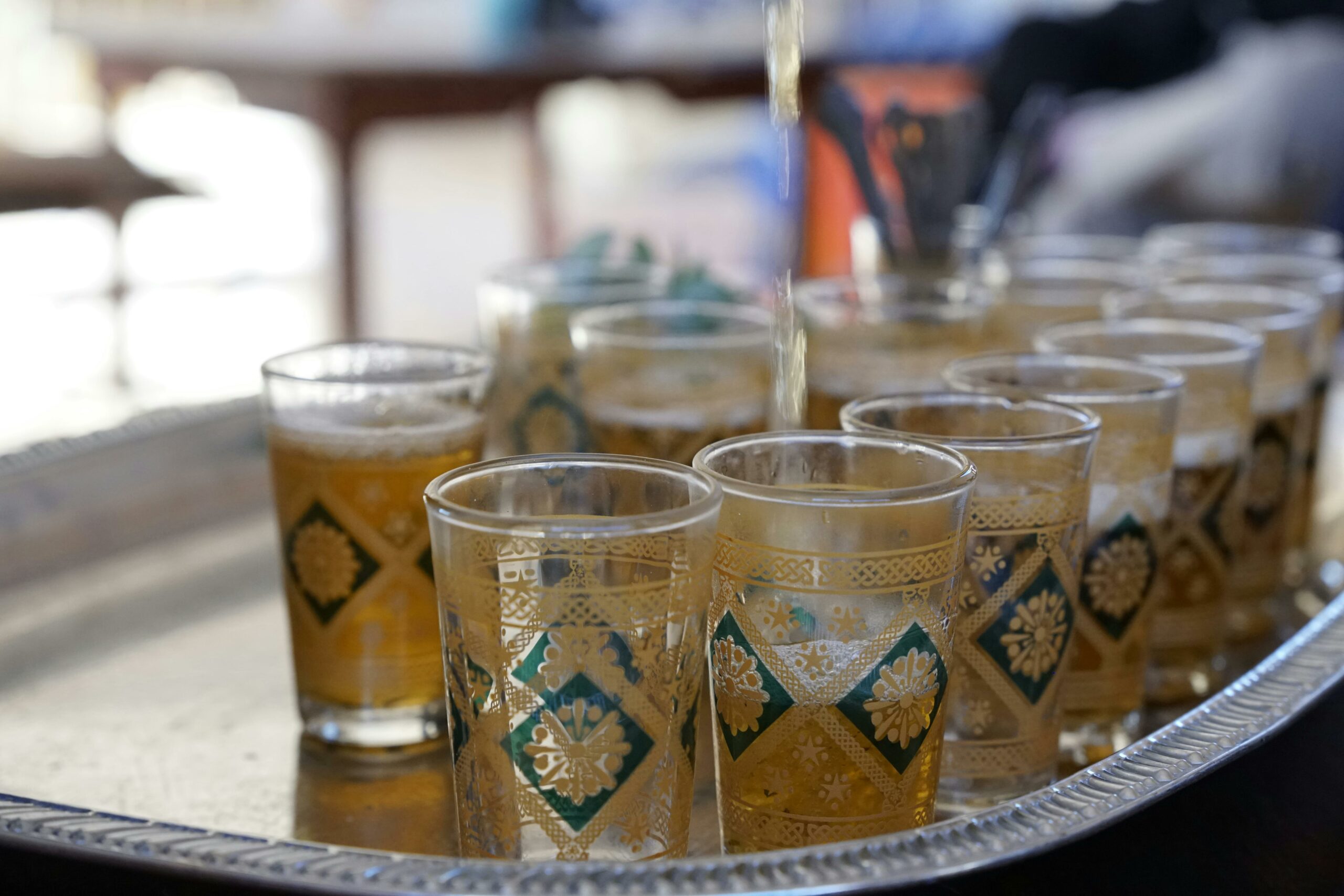
Rather than pouring directly into the glass, the server often raises the teapot high above the table.
At first glance, this may appear purely decorative.
In reality, the technique serves several purposes.
Aeration
Pouring from a height helps oxygenate the tea, improving its flavor and aroma.
Mixing
The process naturally blends the tea, mint, and sugar more evenly.
Foam Formation
The distinctive layer of foam at the top of the glass is considered a sign that the tea has been prepared correctly.
Hospitality and Skill
Traditionally, pouring tea elegantly demonstrates the host’s experience and attention to detail.
For many Moroccans, a well-poured glass of tea reflects both pride and hospitality.
Tea Etiquette Every Traveler Should Know
Understanding basic tea etiquette helps visitors appreciate the cultural importance of the ritual.
Accepting Tea
When tea is offered, accepting at least one glass is generally viewed as a sign of respect and appreciation.
While declining is not considered offensive in every situation, accepting tea often helps establish a positive connection with the host.
Taking Your Time
Tea is rarely rushed.
The experience is designed to encourage conversation and social interaction rather than quick consumption.
Waiting for the Host
In many traditional settings, guests wait until the host serves everyone before beginning to drink.
Multiple Servings
A single glass is often followed by another. Guests may be offered several rounds throughout a visit.
The emphasis is not on the drink itself but on the shared experience surrounding it.
Tea as a Symbol of Hospitality
Hospitality occupies a central place in Moroccan culture, and tea plays a major role in expressing that value.
Across Morocco, welcoming guests is often considered both a social responsibility and a source of pride.
The tea ceremony reflects several important cultural principles:
Generosity
Offering tea demonstrates a willingness to share time and resources with others.
Respect
Serving tea acknowledges the importance of the guest.
Community
Tea creates a space where conversations can develop naturally.
Connection
The ritual helps strengthen personal relationships between individuals and families.
Even brief encounters often begin with tea because it establishes a sense of warmth and trust.
For many travelers, these moments become some of the most memorable experiences of their journey through Morocco.
Regional Variations Across Morocco
Although mint tea is enjoyed throughout the country, traditions vary between regions.
Marrakech and Central Morocco
Sweet mint tea remains the most common style, often served generously throughout the day.
Atlas Mountains
Mountain communities may use locally gathered herbs alongside or instead of mint, depending on the season.
Sahara and Southern Morocco
Tea ceremonies sometimes take on additional symbolic significance, particularly among desert communities where hospitality has historically been essential for survival.
Northern Morocco
Some regions incorporate subtle differences in preparation methods, herb selection, and sweetness levels.
These variations reflect Morocco’s cultural diversity while maintaining the shared importance of tea as a social tradition.
The Famous “Three Glasses” Tradition
One of the most widely discussed tea customs in parts of Morocco and the Sahara is the idea that successive glasses of tea carry different meanings.
Although interpretations vary between communities, a popular saying describes them as:
- The first glass as gentle as life
- The second as strong as love
- The third as bitter as death
The exact wording changes depending on the region and storyteller, but the message remains similar.
The progression symbolizes different stages of life and highlights the deeper cultural significance attached to tea ceremonies.
Whether taken literally or symbolically, the tradition demonstrates how tea in Morocco often carries meanings beyond simple refreshment.
Why Tea Remains Central to Moroccan Identity
Modern Morocco has changed dramatically over the past century.
Cities have expanded, technology has transformed communication, and lifestyles continue to evolve.
Yet tea remains one of the few traditions that connects generations across social, geographic, and cultural boundaries.
A business executive in Casablanca, a shopkeeper in Fez, a guide in the Sahara, and a farmer in the Atlas Mountains may all share the same fundamental ritual.
This continuity helps explain why Moroccan mint tea remains one of the country’s most enduring cultural symbols.
The tradition survives because it fulfills a purpose beyond habit. It creates moments of connection in an increasingly fast-moving world.
FAQ
What is Moroccan mint tea made from?
Traditional Moroccan mint tea is usually prepared with Chinese green tea, fresh mint leaves, and sugar.
Why is tea important in Moroccan culture?
Tea symbolizes hospitality, respect, generosity, and social connection. It plays an important role in both everyday life and special occasions.
Why do Moroccans pour tea from a height?
Pouring tea from a height helps aerate the tea, mix the ingredients, create foam, and demonstrate serving skill.
Is it rude to refuse tea in Morocco?
Not necessarily, but accepting tea is often viewed as a polite gesture and a sign of appreciation for the host’s hospitality.
How many glasses of tea are usually served?
There is no fixed number. Depending on the situation, guests may be offered several glasses during a visit.
Does tea taste the same throughout Morocco?
No. Different regions may vary in sweetness, herbs, preparation methods, and serving customs.
What does tea symbolize in Morocco?
Tea commonly represents welcome, friendship, respect, and community.
Is Moroccan tea always served with mint?
Mint is the most common ingredient, but some regions also use seasonal herbs and local plants depending on availability.
For travelers, Moroccan mint tea may appear to be a simple drink served throughout the country. In reality, it represents one of Morocco’s most meaningful cultural traditions.
Every glass reflects centuries of customs centered on hospitality, respect, and human connection. The careful preparation, distinctive pouring technique, and social rituals surrounding tea all reveal values that remain deeply rooted in Moroccan society.
Understanding these traditions transforms an ordinary cup of tea into something much more significant.
The next time a glass of mint tea is placed in front of you in Morocco, you will not simply be sharing a drink. You will be participating in a tradition that continues to connect people across generations, regions, and cultures.