
The Last Storytellers of Marrakech: Inside the Oral Tradition of Jemaa el-Fna
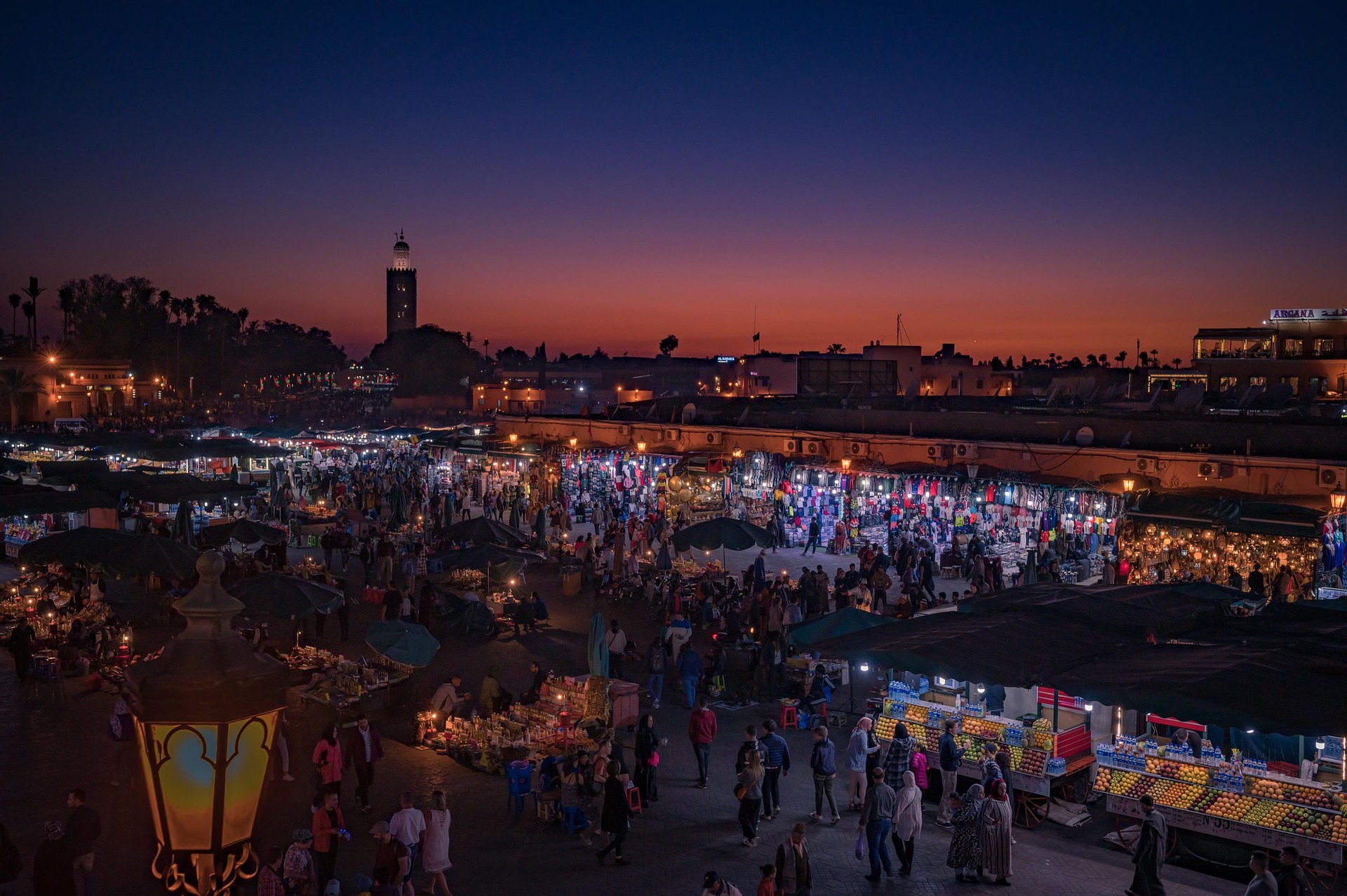
As the sun begins to set over Marrakech, Jemaa el-Fna transforms into something remarkable. The square fills with musicians, food vendors, performers, and crowds moving between dozens of small spectacles. Amid the noise and activity, one of Morocco‘s oldest cultural traditions quietly continues to survive.
Gathered in circles, listeners stand shoulder to shoulder around a storyteller known locally as a hlayqi. Without a stage, microphone, or written script, these storytellers captivate audiences using nothing but their voice, memory, and imagination.
For centuries, the Jemaa el-Fna storytellers served as guardians of Morocco’s oral heritage. They preserved legends, historical events, moral lessons, and collective memories long before books, television, or the internet became common. Today, however, this unique tradition faces an uncertain future as the number of master storytellers continues to decline.
Understanding the Hlaykia tradition is not simply about exploring entertainment. It is about discovering one of the most important cultural practices that helped shape Moroccan identity across generations.
What Is the Hlaykia Tradition?
The word “halqa” refers to the circle that forms around a performer in a public space. From this tradition comes the term “hlayqi,” the storyteller or performer who stands at the center of that circle.
For generations, halqas served as open-air classrooms, theaters, and social gathering spaces. Long before modern media existed, storytellers entertained audiences while simultaneously transmitting knowledge, values, and cultural memory.
A skilled hlayqi could perform for hours without notes. Stories were memorized through years of apprenticeship and practice, often passed directly from one generation to the next.
The performances combined multiple elements:
- Storytelling
- Poetry
- Humor
- Music
- Improvisation
- Audience participation
The result was a living art form that evolved with every performance while remaining deeply rooted in tradition.
Unlike written literature, oral storytelling depended entirely on human memory. Each storyteller became both performer and archive, preserving stories that might otherwise have been lost forever.
Why Jemaa el-Fna Became Morocco’s Storytelling Heart
Although oral storytelling existed throughout Morocco, Jemaa el-Fna gradually became its most famous stage.
Located at the center of Marrakech, the square historically connected traders, travelers, scholars, and local residents arriving from different regions of the country. This constant flow of people created the perfect environment for storytellers to share news, legends, and cultural traditions.
For centuries, the square functioned as far more than a marketplace. It was a place where people gathered to exchange ideas, hear stories, and connect with their community.
As evening approached, storytellers would establish their halqas and attract audiences through dramatic openings, powerful voices, and carefully crafted suspense. Some specialized in historical epics, while others focused on folk tales, religious narratives, or humorous stories.
The ability to keep a crowd engaged was considered a remarkable skill. Experienced storytellers knew exactly when to pause, raise their voice, lower their tone, or end a session with a cliffhanger that encouraged listeners to return the following day.
Over time, Jemaa el-Fna became synonymous with Morocco’s oral storytelling tradition, earning international recognition as one of the country’s most important cultural spaces.
The Stories That Shaped Generations
The stories told in Jemaa el-Fna were never random entertainment. Many carried important lessons about morality, courage, wisdom, loyalty, and justice.
Common themes included:
Folk Legends
Stories of mythical creatures, hidden treasures, magical events, and legendary heroes formed a large part of the tradition. These tales blended imagination with cultural values and often varied from one storyteller to another.
Historical Narratives
Many storytellers recounted events from Moroccan history, introducing audiences to rulers, battles, dynasties, and famous figures through engaging narratives rather than formal education.
Religious and Spiritual Stories
Stories inspired by Islamic traditions helped transmit ethical teachings and spiritual lessons in a way that was accessible to people of all ages.
Social Commentary
Some performances used humor and satire to discuss everyday challenges, social behavior, and community issues. These stories often encouraged reflection while entertaining the audience.
Because many listeners could not read in earlier centuries, storytelling played a crucial role in preserving and transmitting knowledge throughout Moroccan society.
UNESCO Recognition and Cultural Importance
The cultural value of Jemaa el-Fna extends far beyond Marrakech itself.
In 2001, UNESCO recognized the cultural space of Jemaa el-Fna as a Masterpiece of the Oral and Intangible Heritage of Humanity. This recognition highlighted the square’s importance as a living center of oral traditions, music, performance, and cultural expression.
The decision was significant because UNESCO was not recognizing a monument or building. Instead, it recognized the living traditions practiced within the square itself.
This distinction emphasized an important idea: cultural heritage is not limited to physical structures. It also includes knowledge, practices, performances, and traditions passed from one generation to another.
The storytellers of Jemaa el-Fna became symbolic representatives of this concept, embodying centuries of collective memory through spoken word.
Today, the square remains one of the world’s most famous examples of living intangible heritage.
Why the Storytellers Are Disappearing
Despite international recognition, the number of traditional storytellers has declined dramatically in recent decades.
Several factors have contributed to this change.
Changing Entertainment Habits
Television, smartphones, social media, and digital content now compete for attention in ways previous generations never experienced.
Fewer Apprentices
Historically, young storytellers learned directly from experienced masters. Today, fewer young people choose to dedicate years to mastering the art.
Economic Challenges
Storytelling often provides limited financial stability compared to other professions, making it difficult for the tradition to attract new practitioners.
Language and Cultural Shifts
Many traditional stories rely on linguistic expressions, cultural references, and performance styles that younger audiences may not fully understand.
As older masters retire or pass away, valuable knowledge risks disappearing with them.
While musicians and performers remain common in Jemaa el-Fna, authentic traditional storytellers have become increasingly rare.
Can the Hlaykia Tradition Survive?
Despite these challenges, efforts continue to preserve Morocco’s storytelling heritage.
Cultural organizations, researchers, historians, and local advocates have worked to document performances, record stories, and raise awareness about the importance of oral traditions.
Tourism has also played a role in maintaining interest. Visitors from around the world often seek experiences that connect them with Morocco’s cultural identity, and storytelling remains one of the most authentic examples of that heritage.
However, preservation requires more than documentation.
The tradition survives only when stories continue to be told, heard, and passed on. Oral heritage remains alive through participation rather than preservation alone.
The future of the Hlaykia tradition depends on whether new generations choose to learn, adapt, and continue this centuries-old practice.
Experiencing Jemaa el-Fna Today
Visitors to Marrakech can still encounter elements of the storytelling tradition, particularly during the evening when Jemaa el-Fna becomes most active.
While the number of traditional storytellers has decreased, observing a halqa remains one of the most authentic cultural experiences available in the city.
The experience differs from modern entertainment. There are no screens, special effects, or elaborate productions. Instead, the focus remains entirely on the relationship between storyteller and audience.
Standing among locals and visitors gathered around a hlayqi offers a glimpse into a form of communication that existed long before modern technology.
It is a reminder that stories have always been one of humanity’s most powerful ways of preserving memory, sharing knowledge, and creating community.

FAQ
What are Jemaa el-Fna storytellers?
Jemaa el-Fna storytellers are traditional performers known as hlayqis who share stories, legends, historical narratives, and cultural knowledge through oral performance in Marrakech’s famous central square.
What is a halqa?
A halqa is a circle of spectators gathered around a performer. The term is closely associated with traditional storytelling and public performances in Morocco.
Why is storytelling important in Moroccan culture?
Storytelling helped preserve history, values, traditions, and knowledge for generations, particularly before widespread literacy and modern media.
What does Hlaykia mean?
Hlaykia refers to the traditional practice of storytelling performed by hlayqis within a halqa setting.
Is the storytelling tradition still alive in Marrakech?
Yes, but it has declined significantly. While some storytellers still perform in Jemaa el-Fna, their numbers are much lower than in previous generations.
Why did UNESCO recognize Jemaa el-Fna?
UNESCO recognized Jemaa el-Fna because of its exceptional role in preserving oral traditions, cultural practices, music, storytelling, and other forms of intangible heritage.
Can tourists watch traditional storytellers?
Yes. Visitors can still find storytellers and other traditional performers in Jemaa el-Fna, particularly during the evening when the square becomes most active.
Why are traditional storytellers disappearing?
Factors include changing entertainment habits, economic challenges, fewer apprentices, and the growing influence of digital media.
Long before social media, television, or even widespread literacy, Morocco’s storytellers preserved the country’s collective memory through the simple power of spoken words.
The storytellers of Jemaa el-Fna carried legends, wisdom, history, and imagination across generations, transforming a public square into one of the world’s most extraordinary cultural stages.
Although their numbers continue to decline, their legacy remains woven into the identity of Marrakech itself. Every surviving halqa serves as a reminder that some of humanity’s most valuable traditions are not written in books or carved into monuments—they live through voices, memories, and shared experiences.
For travelers seeking to understand the deeper cultural soul of Marrakech, few experiences are as meaningful as witnessing the enduring tradition of the last storytellers of Jemaa el-Fna.