
8-Day Morocco Trip from Tangier to Marrakech
From Tanger
8 Day
To Marrakech
About this trip
Eight days to travel the length of Morocco — from the northern coast all the way to the vibrant south — and to experience the full, extraordinary range of what this country has to offer.
This journey takes you from the threshold city of Tangier through the blue mountain lanes of Chefchaouen, past ancient Roman ruins and imperial monuments, deep into the medieval heart of Fes, south through cedar forests and oasis valleys to the edge of the Sahara, across the dramatic canyon country of the south, and finally over the High Atlas and into Marrakech. Every single day is different. Every landscape, every city, every cultural encounter adds a new layer to your understanding of a country that consistently defies easy description.
Camel treks, desert nights, ancient kasbahs, living craft traditions, mountain passes, and hidden oases — this tour brings all of it together into eight days that feel both full and genuinely immersive.
Trip Highlights:
Discover Fes, Morocco’s spiritual and cultural heart, with its lively medina
Cross the scenic Middle Atlas Mountains, stopping in Ifrane and Azrou’s cedar forests
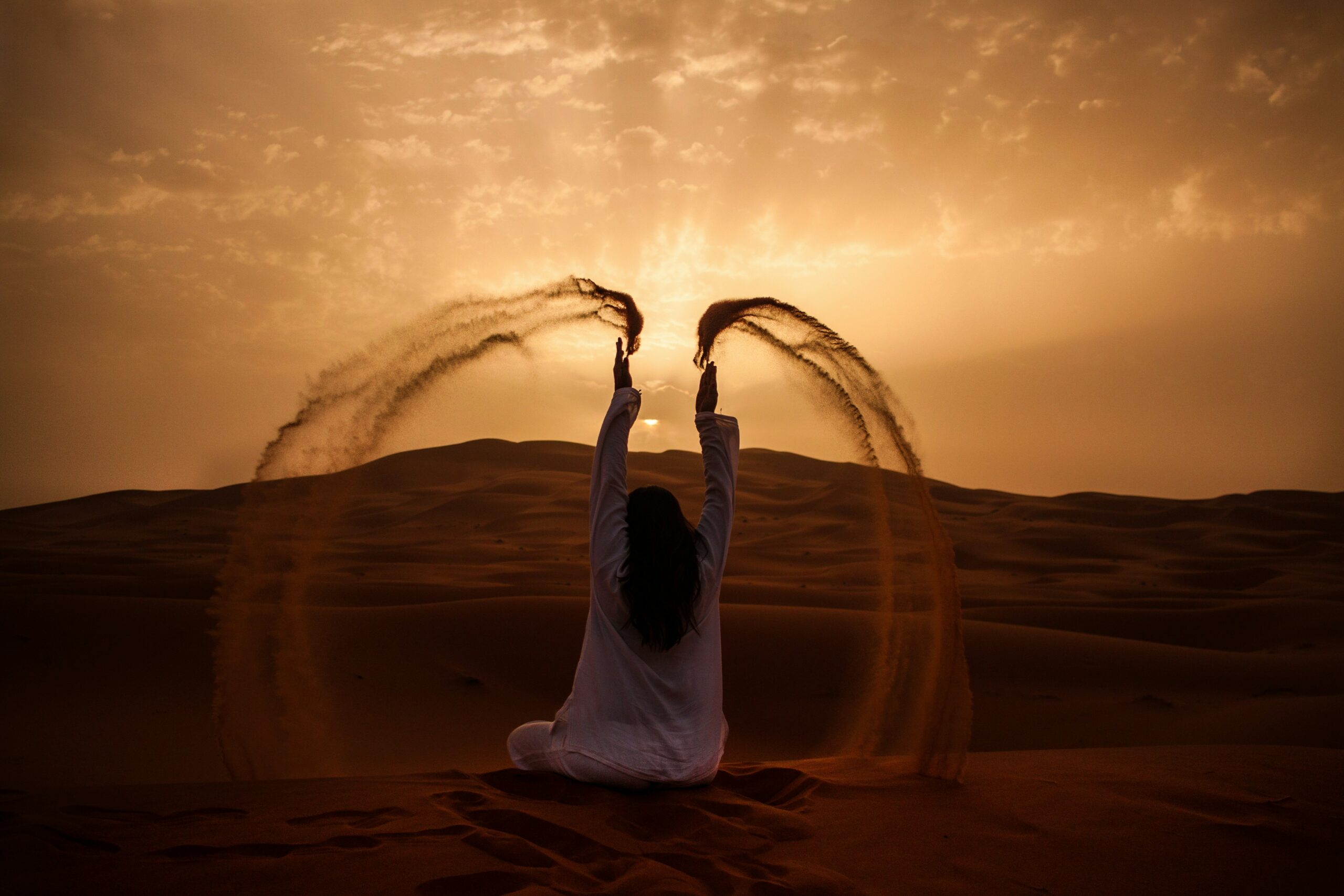
Explore the Sahara Desert with camel treks and overnight stays under the stars
Traverse the High Atlas Mountains with stunning panoramic views
Wander the historic streets and bustling markets of Marrakech
Spot wild Barbary monkeys in the cedar forests of Azrou
Traverse the High Atlas Mountains with panoramic viewpoints
7-Day Tanger to Marrakech Desert Trip Itinerary
Day 1: Tangier – Chefchaouen
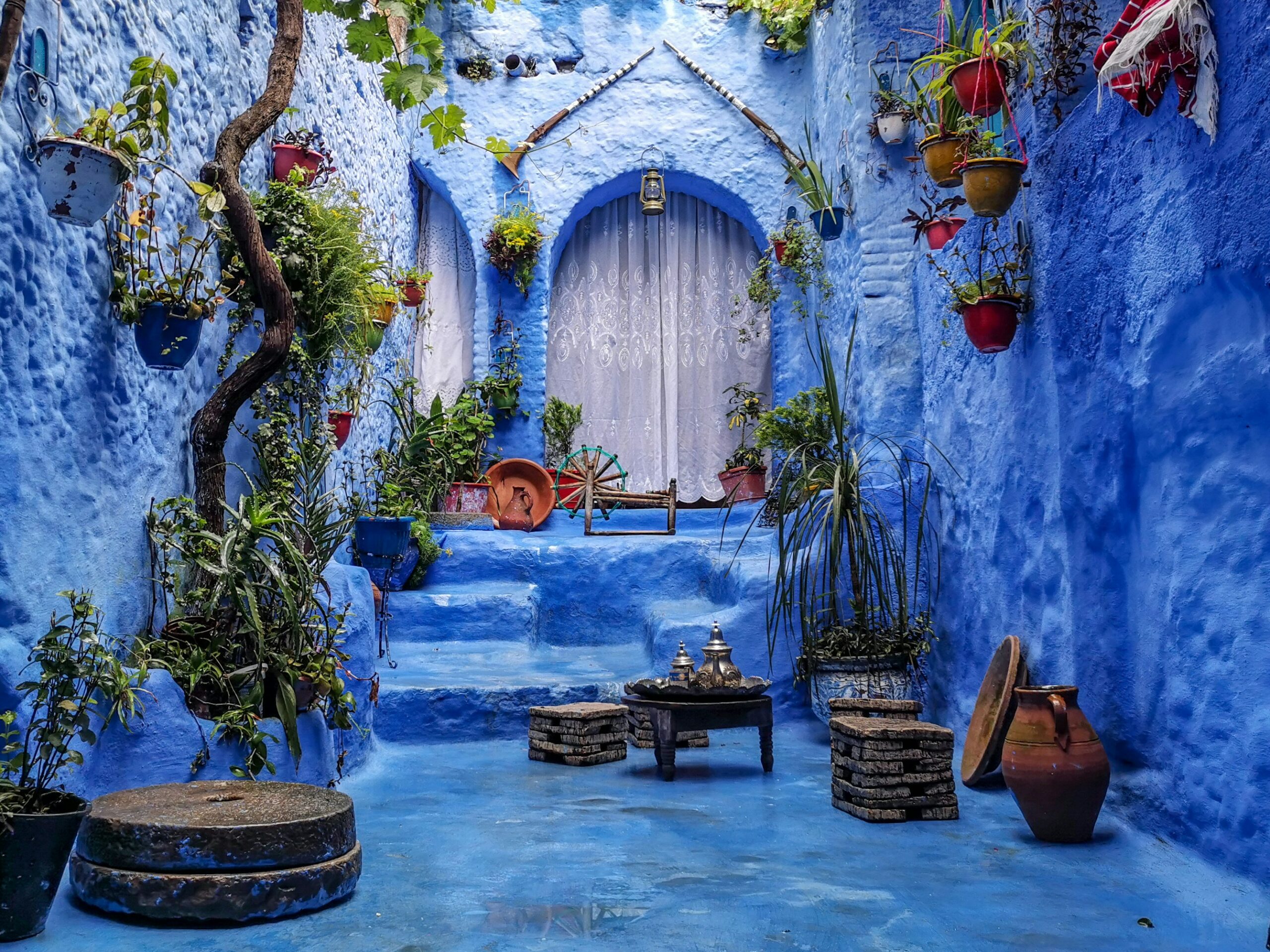
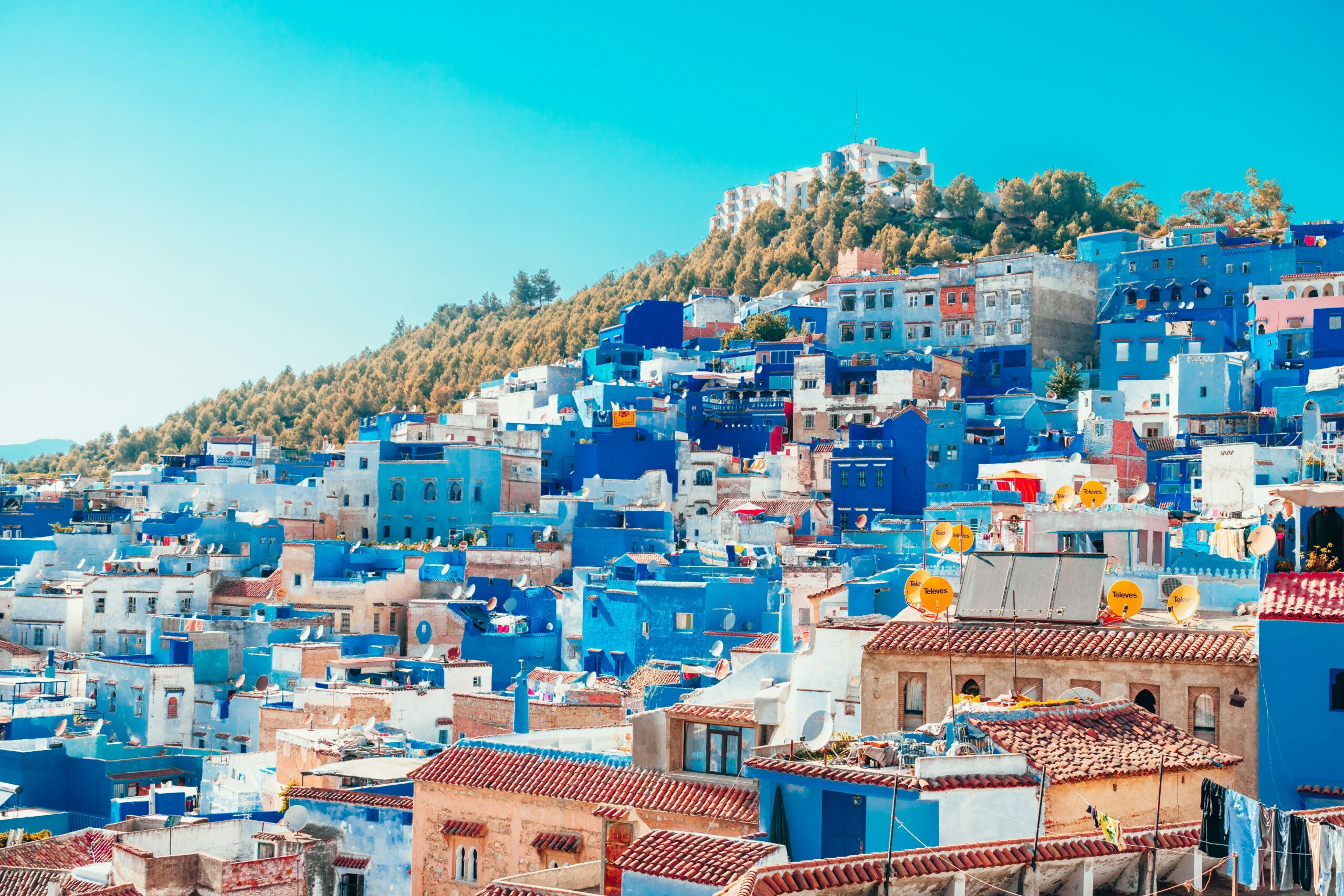
Tangier has always been a city of arrivals — a place where continents meet and worlds overlap — and it makes a fitting start to a journey across Morocco. From the coast, the road climbs into the Rif Mountains, winding through a landscape of forested ridges and terraced hillsides before delivering you to Chefchaouen: a town that earns every superlative thrown at it and then some.
The Blue City is exactly what it promises — narrow lanes washed in every conceivable shade of blue and white, the air cooler and cleaner than anywhere on the plains below, and a pace of life that has a genuine, unforced gentleness to it. Wander the winding alleys, fall into conversation with the locals, find a spot in the main square as the evening light settles over the mountains. Dinner included, and a first night in one of Morocco’s most quietly enchanting places.
Day 2: Chefchaouen – Volubilis – Meknes – Fes
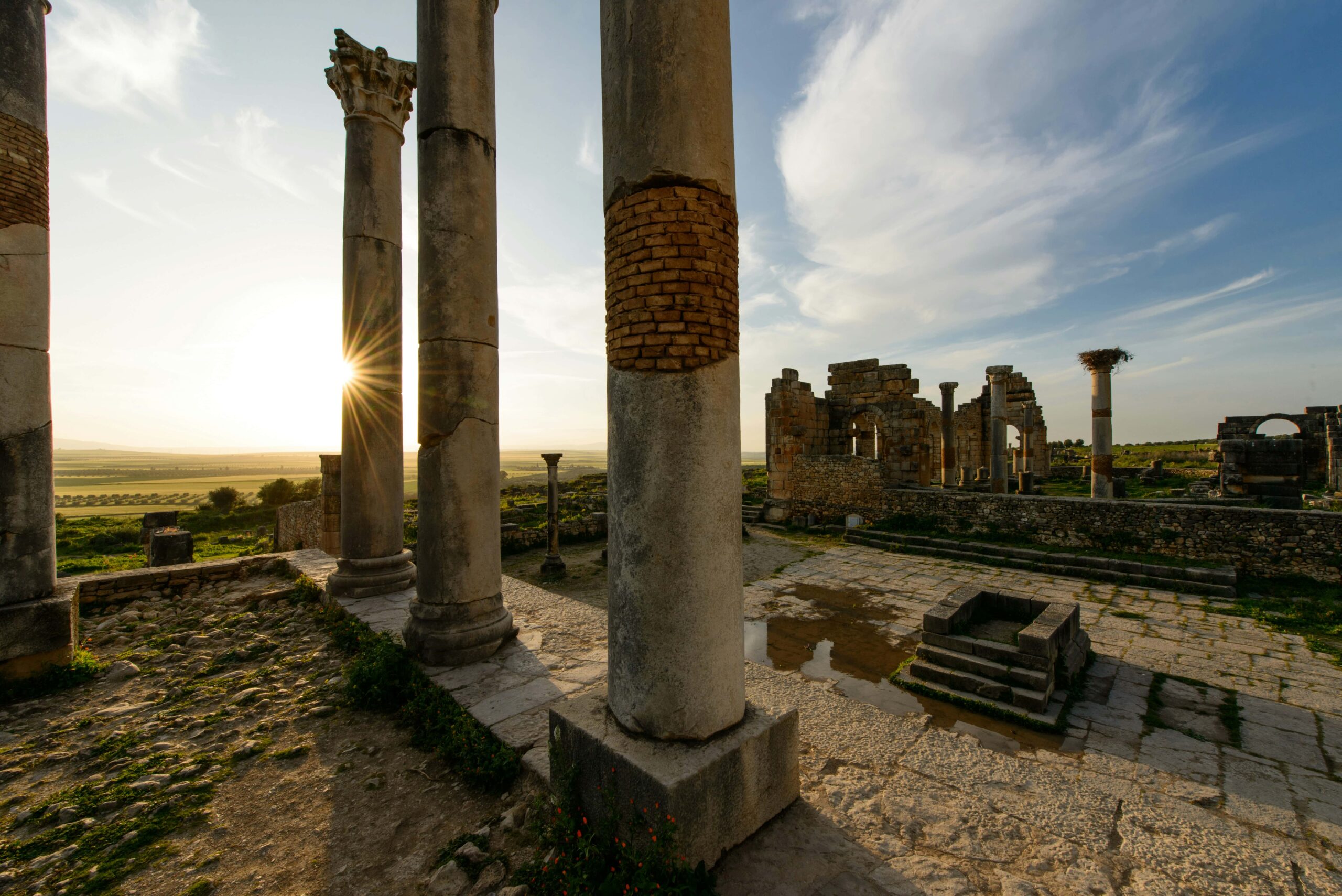
After breakfast, the road heads south toward one of Morocco’s most unexpected treasures. Volubilis — Rome’s most far-flung North African outpost — rises from the Moroccan plain with a quiet grandeur that catches most visitors off guard. The mosaics are extraordinarily well preserved, the triumphal arch still stands against open sky, and the sheer scale of the site — columns, temples, and noble residences spread across a hilltop — makes it one of those places that stays with you long after you’ve moved on.
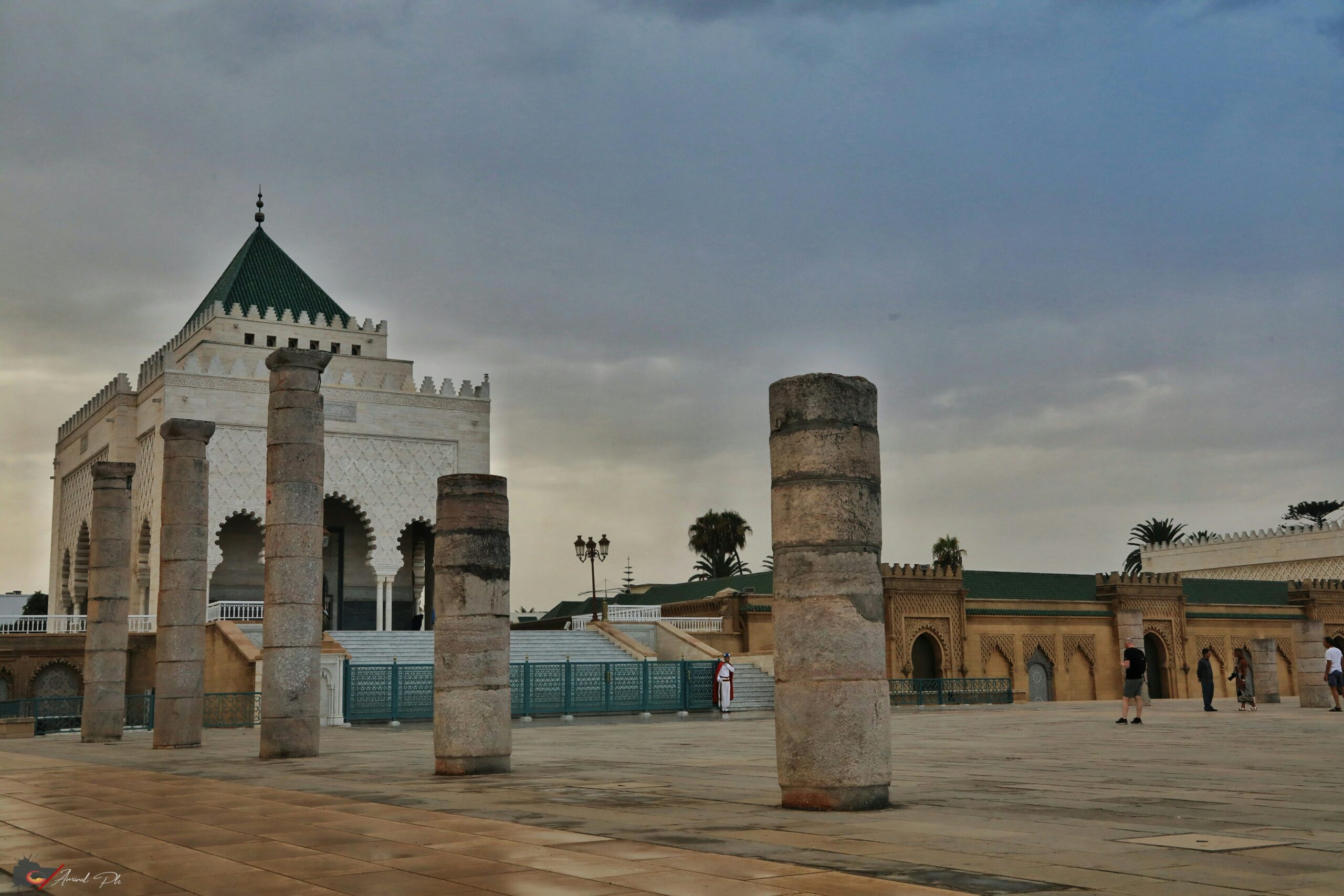
Meknes follows, and it’s a city that rewards the attention it rarely receives. Its monumental Bab Mansour gate is one of the finest pieces of Islamic architecture in Morocco, and the royal granaries and stables hint at the imperial ambitions of the sultan who built them on a scale that feels almost absurd. A proper exploration before the road carries you into Fes for the night — the ancient city already stirring with the energy of a place that has been continuously inhabited for over twelve centuries.
Day 3: Fes Exploration
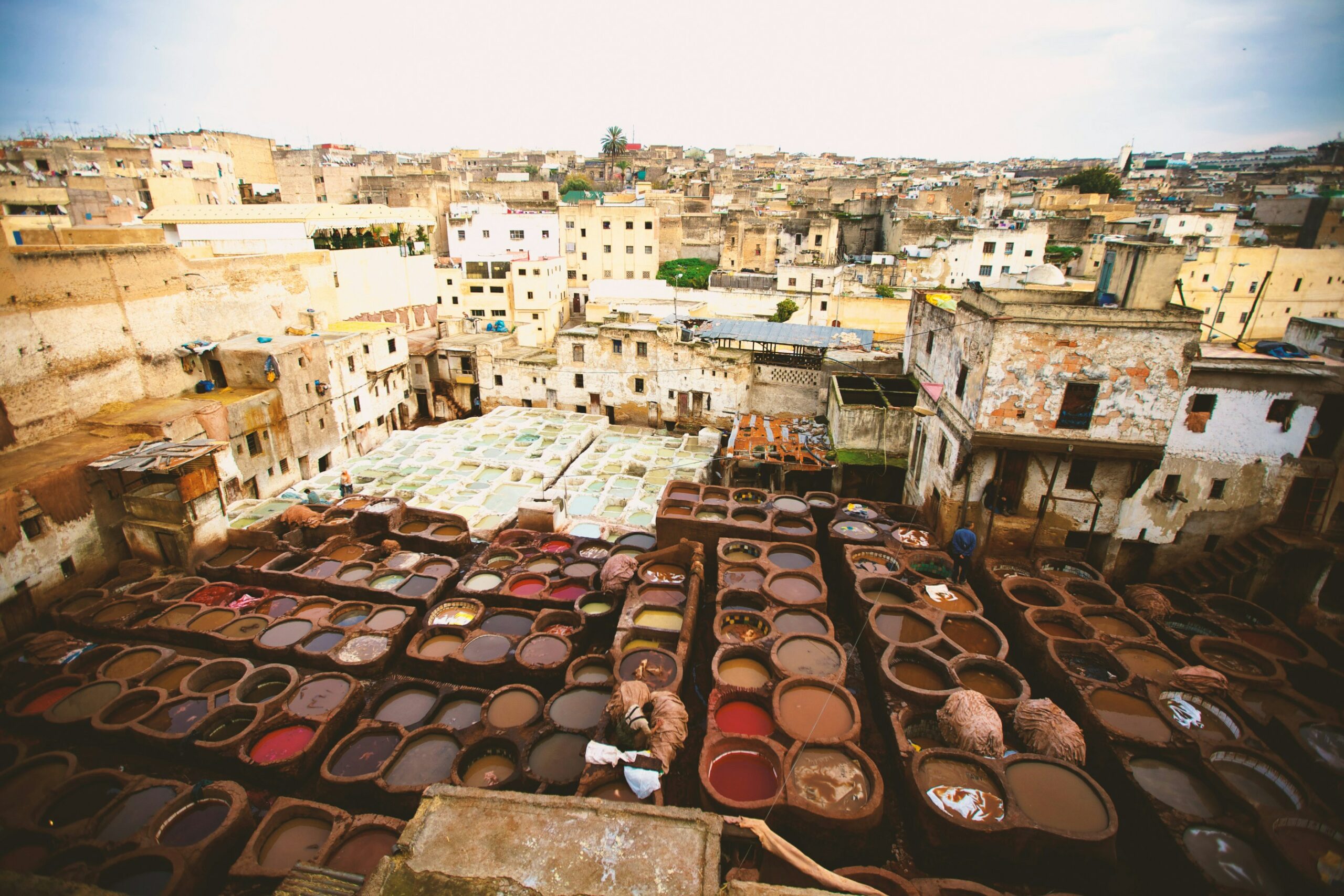
A full day in Fes, and it’s entirely justified. Fes el-Bali is the largest car-free medieval urban environment in the world, and its density of history, architecture, and living craft tradition is genuinely unlike anything else you will encounter anywhere. The day moves through thousands of alleyways — some barely wide enough for two people — past the ornate facades of ancient madrasas whose carved plaster and painted cedar ceiling represent the absolute pinnacle of Moroccan craftsmanship, through the famous tanneries where leather has been worked in the same stone vats for generations, and into the Jewish quarter, the royal palace gates, and the souks where potters, weavers, metalworkers, and spice merchants carry on trades their ancestors practiced in the same streets centuries ago.
Dinner with panoramic views over the medina brings the day to a fittingly spectacular close — the city spread out below in the evening light, its minarets and rooftops and smoke from a thousand kitchens creating a scene that looks almost exactly as it would have a thousand years ago.
Day 4: Fes – Azrou – Midelt – Ziz Valley – Merzouga
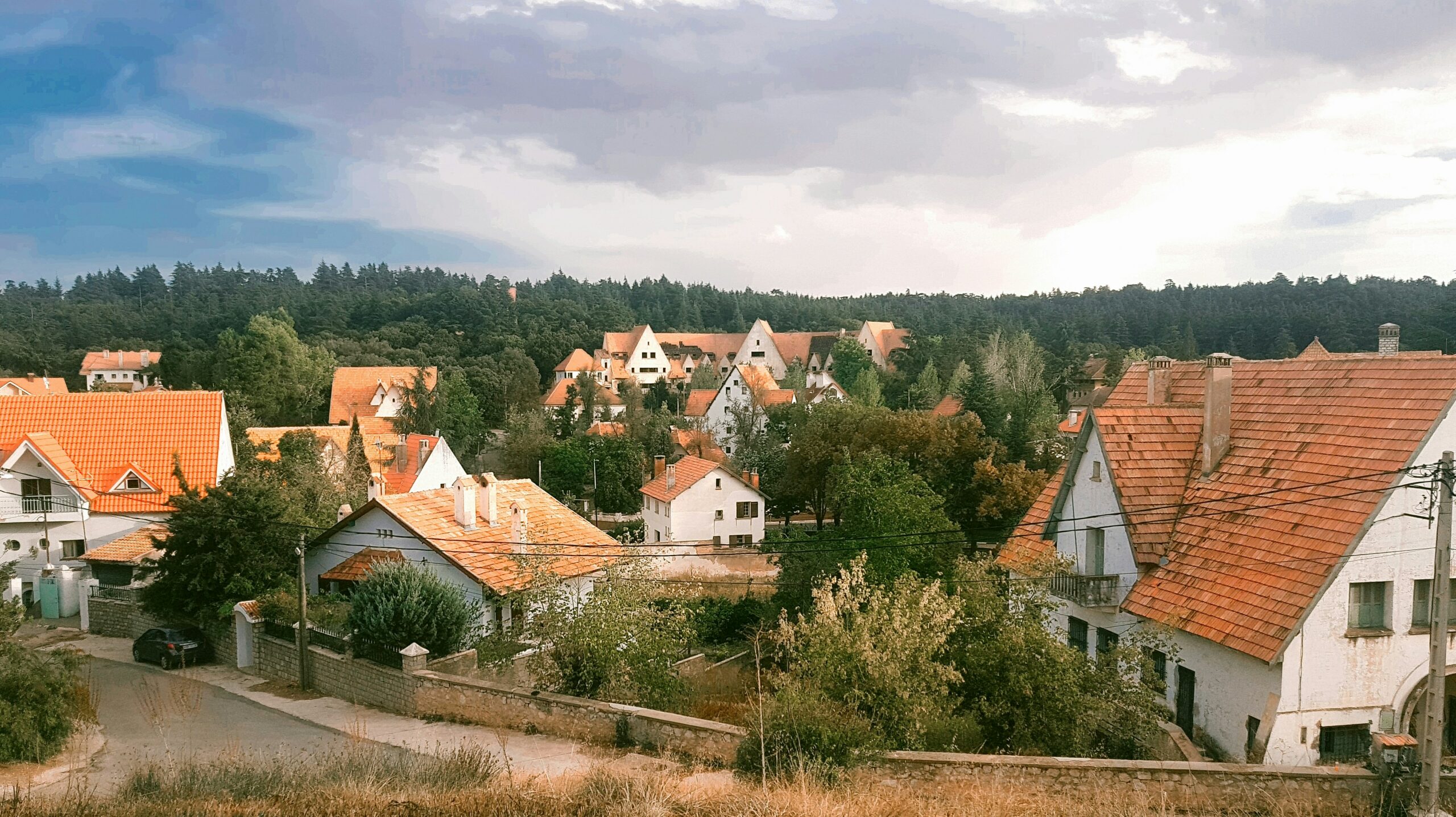
Leaving Fes, the road heads south into the Middle Atlas — and the shift in scenery is immediate and welcome. Cedar forest closes in on either side of the road above Azrou, and the Barbary macaques that move through the trees here are as entertaining as they are unexpected. They peer down from the branches with obvious curiosity, completely at ease with the humans below, and it’s genuinely difficult to move on.
From the forests, the landscape opens gradually into the high plateau country around Midelt before descending toward the Ziz Valley — one of Morocco’s most beautiful natural corridors, its dense palm groves lining the river through otherwise arid terrain in a long, lush sweep of green. The drive along the valley is quietly spectacular, and the gradual transition from oasis landscape to open pre-Saharan plain builds a sense of anticipation that the first sight of Erg Chebbi’s dunes fully rewards. A first night at the edge of the desert, with the Sahara beginning to make its presence felt.
Day 5: Merzouga Desert Adventure
The sunrise over Erg Chebbi is one of those experiences that earns its reputation without effort — the dunes shifting through deep shadow, then amber, then brilliant gold as the first light moves across them in near-total silence. It’s a genuinely humbling way to begin a day.
After breakfast, the desert opens up for exploration. A visit to a local nomadic village offers the kind of authentic, unhurried cultural encounter that is increasingly rare — sharing tea, hearing stories, and spending time with a community whose intimate knowledge of this landscape runs many generations deep. The camel trek to a remote desert camp in the afternoon takes you further into the dunes than the previous evening, and the sunset from out there — with nothing but sand and sky in every direction — is something that photographs simply cannot capture. A traditional dinner, Berber drumming around the fire, and a sky full of stars close out one of the most memorable days of the entire journey.
Day 6: Merzouga – Rissani – Todra Gorges – Dades Valley
Leaving the Sahara is always a little bittersweet, but the day ahead more than compensates. Rissani comes first — one of the most historically significant towns in southern Morocco, the ancestral seat of the Alaouite dynasty and home to a traditional market that has been operating for centuries. Its souks are genuinely lively and local, filled with the commerce and color of a place that trades because it always has, not because tourists are watching.
Erfoud follows, where a stop at one of the town’s fossil workshops reveals an unexpected craft tradition — ancient marine fossils transformed into beautifully finished pieces by skilled local artisans. Then Todra Gorge, where the scale of the canyon walls — nearly 300 meters of sheer rock rising on either side of a narrow river corridor — delivers its usual immediate impact. And finally the Dades Valley, whose extraordinary rock formations and distinctive layered cliffs make it one of the most photographed landscapes in the entire south. An overnight here, among the Berber villages and canyon scenery, rounds out a day that has managed to be remarkably varied.
Day 7: Dades Valley – Skoura – Ait Ben Haddou – Marrakech
The penultimate day follows one of Morocco’s most rewarding stretches of road. The Skoura Oasis opens the morning — a peaceful expanse of dense palm groves and ancient earthen kasbahs that feels like a world existing entirely on its own terms. The Valley of Roses follows, where the fragrance of seasonal blooms carries on the air and the landscape has a softness and color that stands in beautiful contrast to the canyon country behind you.
Ait Ben Haddou is the day’s centerpiece, and it delivers entirely. This UNESCO-listed fortified ksar — built from the red earth of the landscape it occupies, once a critical waypoint on the ancient trans-Saharan trade routes — is one of the most visually powerful and historically resonant places in all of Morocco. Its earthen towers, narrow alleyways, and elevated views over the surrounding countryside make a proper exploration here feel like genuine time travel. From Ait Ben Haddou, the road climbs back into the High Atlas — panoramic views opening up at every turn — before the long descent toward Marrakech, arriving in the city by evening with one final day ahead.
Day 8: Marrakech City Trip
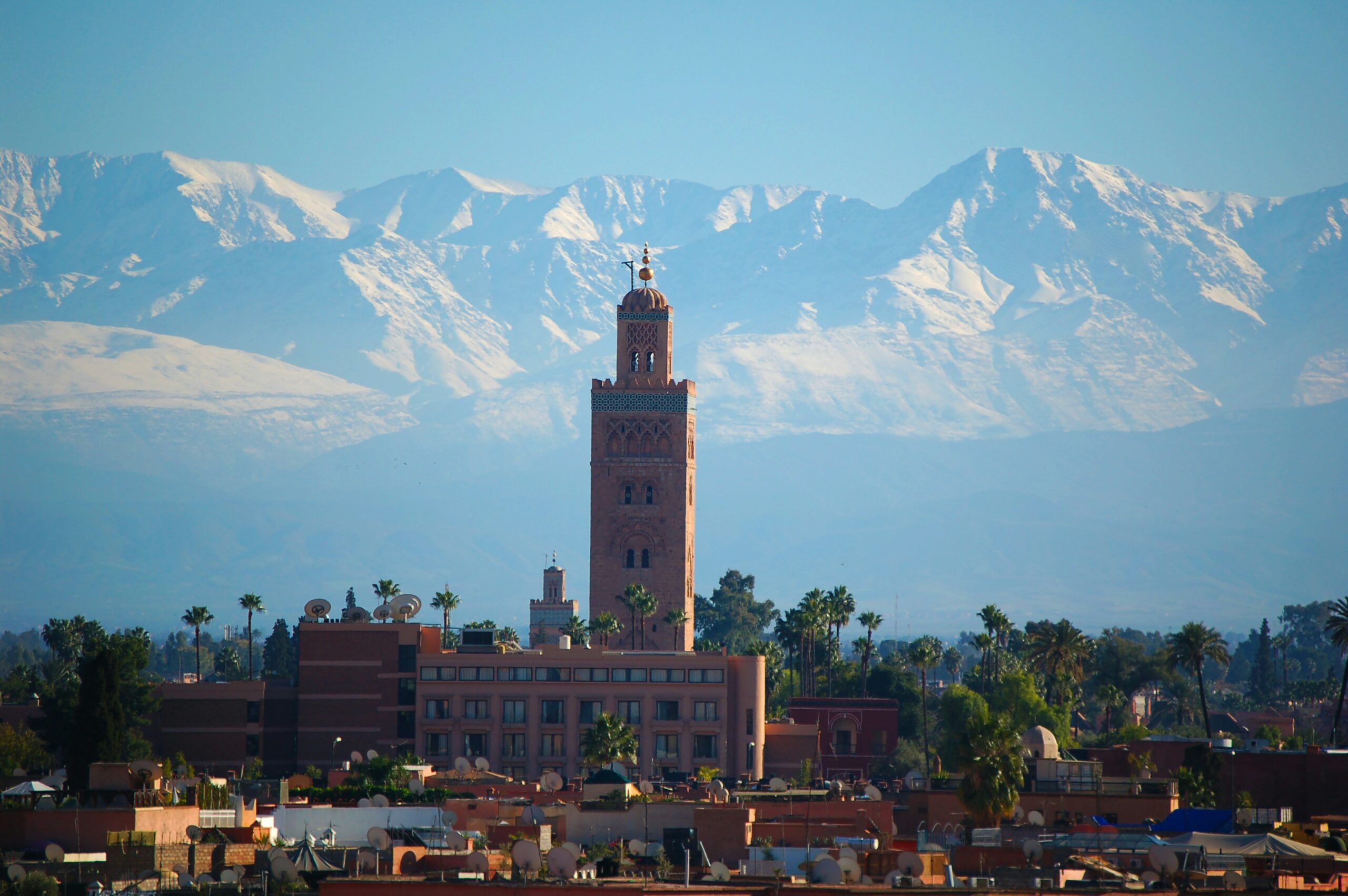
The last day is Marrakech’s, and it’s a city that knows how to make an impression. The medina unfolds gradually — the souks a labyrinth of color, scent, and sound, the artisan quarters where woodworkers, leather craftsmen, and weavers practice their trades openly and with obvious pride. Historic palaces reveal themselves behind unassuming doorways, their elaborately decorated interiors a reminder of the city’s centuries as a seat of imperial power. The garden sanctuaries offer a moment of cool, geometric calm in the middle of all that sensory richness. Ancient tombs decorated with some of the finest tilework in the country. The great minaret of the Koutoubia watching over everything.
And then Djemaa el-Fna — the famous main square, which by late afternoon transforms into something entirely its own: food stalls sending smoke into the evening air, musicians and storytellers and street performers drawing crowds from every direction, the whole thing operating at a pitch of energy and color that is simultaneously chaotic and completely magnetic. It’s one of the great urban experiences in the world, and a fittingly extraordinary way to close out eight days in one of the world’s most extraordinary countries.
Gallery
What’s Included & Excluded
- Private or small-group transportation in a comfortable, air-conditioned vehicle
- Professional, licensed driver and/or local guide (depending on the trip)
- Pick-up and drop-off at your hotel, riad, or agreed meeting point
- Accommodation (hotels, riads, desert camps) as specified in the itinerary
- Breakfasts & dinners (depending on the type of accommodation chosen)
- Activities and experiences listed in the itinerary (quad biking, camel trekking, excursions, etc.)
- All fuel, road tolls, and parking fees
- Local assistance and 24/7 customer support during your trip
- International or domestic flights
- Travel insurance and personal expenses
- Drinks and meals not mentioned in the itinerary
- Entrance fees to monuments and attractions (unless otherwise stated)
- Tips and gratuities for guides, drivers, and staff (optional but appreciated)
- Optional activities not listed in the trip program